


On November 7, 2024, Timothy Hudson raped and killed his stepsister, Anna Kepnar, on a Carnival cruise ship. This week, a judge ruled because Hudson is only 16-years-old, he gets to spend time at home with family awaiting trial.
As a human rights lawyer I have represented survivors of domestic and sexual violence for more than 15 years. And in those years, I have learned a hard truth. One that will make some men uncomfortable. This is good. Discomfort is the beginning of accountability.
Women are not safe around men. Period.
This is not a generalization born of bias. Nor an emotional reaction. But a documented, data-driven, legally and empirically supported fact that our society has spent generations refusing to confront with the seriousness it demands.
Women are simply not safe around men.
I have written before about the need for male accountability. I have said plainly that you do not get a cookie for not being a rapist—that basic human decency is the floor, not an achievement. Today I want to go further. I want to lay out the full scope of this crisis, dismantle the myths that protect it, and propose the concrete solutions that could actually end it.
Because this is not sustainable. And the cost of our collective inaction is being paid, every single day, in the bodies, safety, and freedom of women and girls.
Let’s Address This.
The Scope of the Crisis
According to the World Health Organization, one in three women, at minimum, report experiencing sexual assault or rape by men.
At minimum. Because we know—as every researcher, every survivor advocate, and every prosecutor knows—that reporting rates are always lower than actual rates. Shame, fear of retaliation, distrust of a legal system built and run predominantly by men, and the statistical reality that 98% of men who commit rape will never spend a single day in prison—per RAINN—all ensure that the true number is higher than what we can measure. The criminal justice system, designed by men and historically operated to protect men from consequences, has functioned precisely as designed.
So when I say one in three women, understand that this is a conservative floor. The ceiling is almost certainly worse. And worse, the threat is not coming from strangers. It is coming from men who women trust.
Congress passed the Laken Riley Act after an undocumented immigrant killed Laken Riley. That fear of the unknown assailant motivated Congress to violate our Constitution, suspend due process for immigrants, and demonize anyone who opposed as a threat to women’s safety. But the data shows that not only does such a piece of legislation not actually make women safer—by ignoring where the greatest threat to women exists—it likely puts women in even more danger.
Take the aforementioned example of Timothy Hudson. The family reports that they saw no signs of danger or aggression from Hudson to Kepnar. Yet, Kepnar suffered a horrific rape and murder while with someone that she considered family, and both of their families considered a trusted male. And while this is an anecdote, the data backs it up.
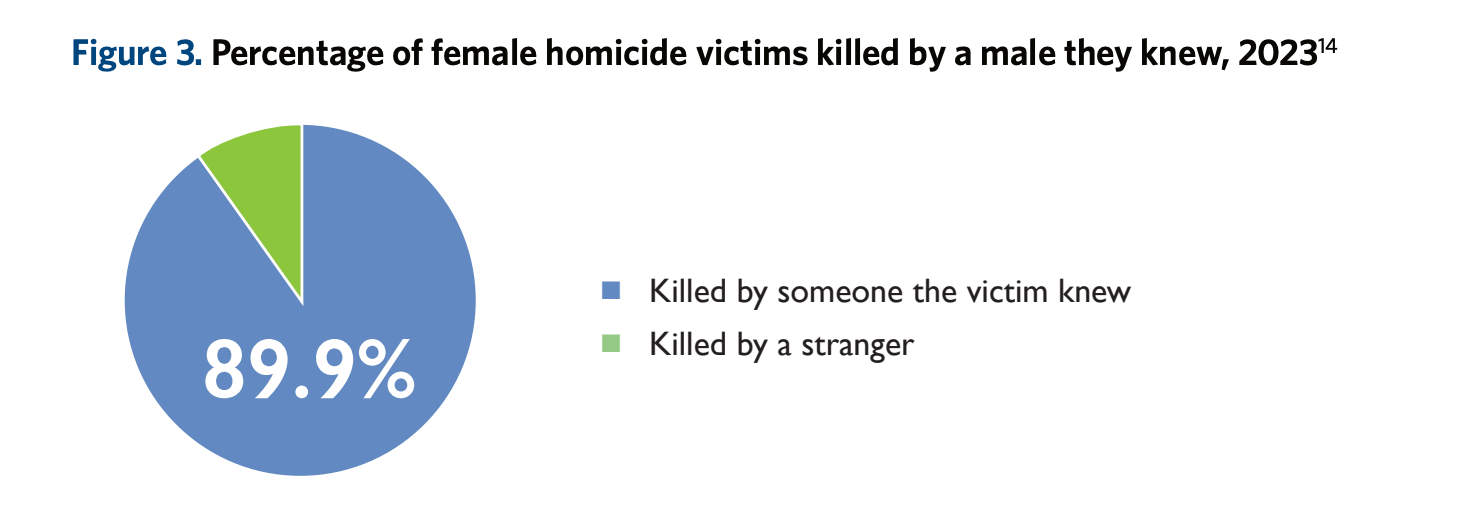
According to the Violence Policy Center’s (“VPC”) landmark study When Men Murder Women—analyzing the most recent FBI data available—more than 2,400 females were killed by males in 2023. Of these, 89.9% of women who were murdered knew their killer. Read that again. Nine out of ten women murdered by men were killed by someone they knew. Of the victims who knew their offenders, 57.1% were wives or other intimate acquaintances of their killers. Nearly nine times as many females were murdered by a male they knew than were killed by male strangers.
The threat is not the stranger. The threat is the husband. The boyfriend. The colleague. The family member. The friend. The man she trusted.
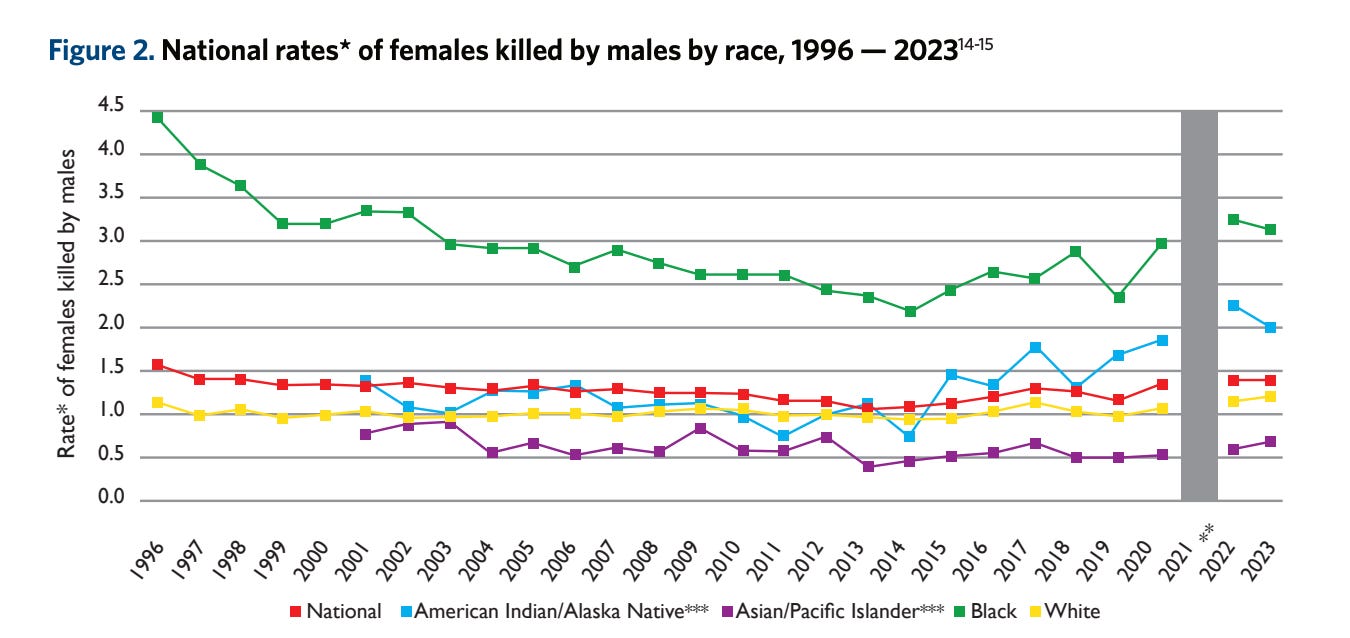
Black women are disproportionately impacted by this lethal violence. In 2023, Black females were murdered by males at a rate of 3.1 per 100,000—two and a half times the rate of 1.2 per 100,000 for white females. Any honest conversation about gender-based violence must reckon with the ways race compounds vulnerability and the ways our systems have historically failed Black women most catastrophically of all.
At this junction gun enthusiasts typically reply, “this is why we must arm more women.” But once again, the data tells a very different story. It shows that arming women does not make them safer. It makes them exponentially more likely to die in gun violence.
Research based on FBI data consistently shows that when a firearm is present in a domestic violence situation, a woman is 100 times more likely to be killed by that firearm than to successfully use it in self-defense. The VPC’s own research confirms that the presence of a firearm can turn domestic violence into domestic homicide. The weapon intended for protection becomes the instrument of murder—because in the vast majority of cases, the attacker is not a stranger she is prepared to shoot. He is someone she loves, someone she lives with, someone she did not see coming until it was too late.
Firearms are not the answer. Accountability, prevention, and systemic change are.
The Problem Is Getting Worse
This is not a static crisis. It is an accelerating one.
With the global rise of right-wing extremism—in the United States, in Europe, in several South American nations, in India, across every continent—women’s rights are being stripped away with deliberate, coordinated intent. Reproductive autonomy is under assault. Legal protections are being rolled back. As I’ve written before, child marriage is a crisis in nations like Afghanistan as well as right here in the United States. The cultural permission structure for misogyny is being rebuilt in real time, from the highest offices of power downward.
And then there is the convenient scapegoating. Some men—with remarkable absence of irony or self-reflection—point to the proliferation of sex work websites as evidence that women are the problem. Millions of women on these platforms, they say, shaking their heads.
Let me offer some arithmetic.
For every one sex worker on a platform, estimates suggest at least 100 paying male subscribers are funding the industry. The demand is male. The money is male. The industry exists because men created it, men fund it, and men sustain it. If your concern is genuinely about the existence of sex work, the conversation begins—and largely ends—with male demand. The men pointing fingers at women for the existence of an industry they built and bankroll are not engaging in moral analysis. They are engaging in deflection.
This is a global phenomenon. Not a single country on Earth has achieved gender equity.
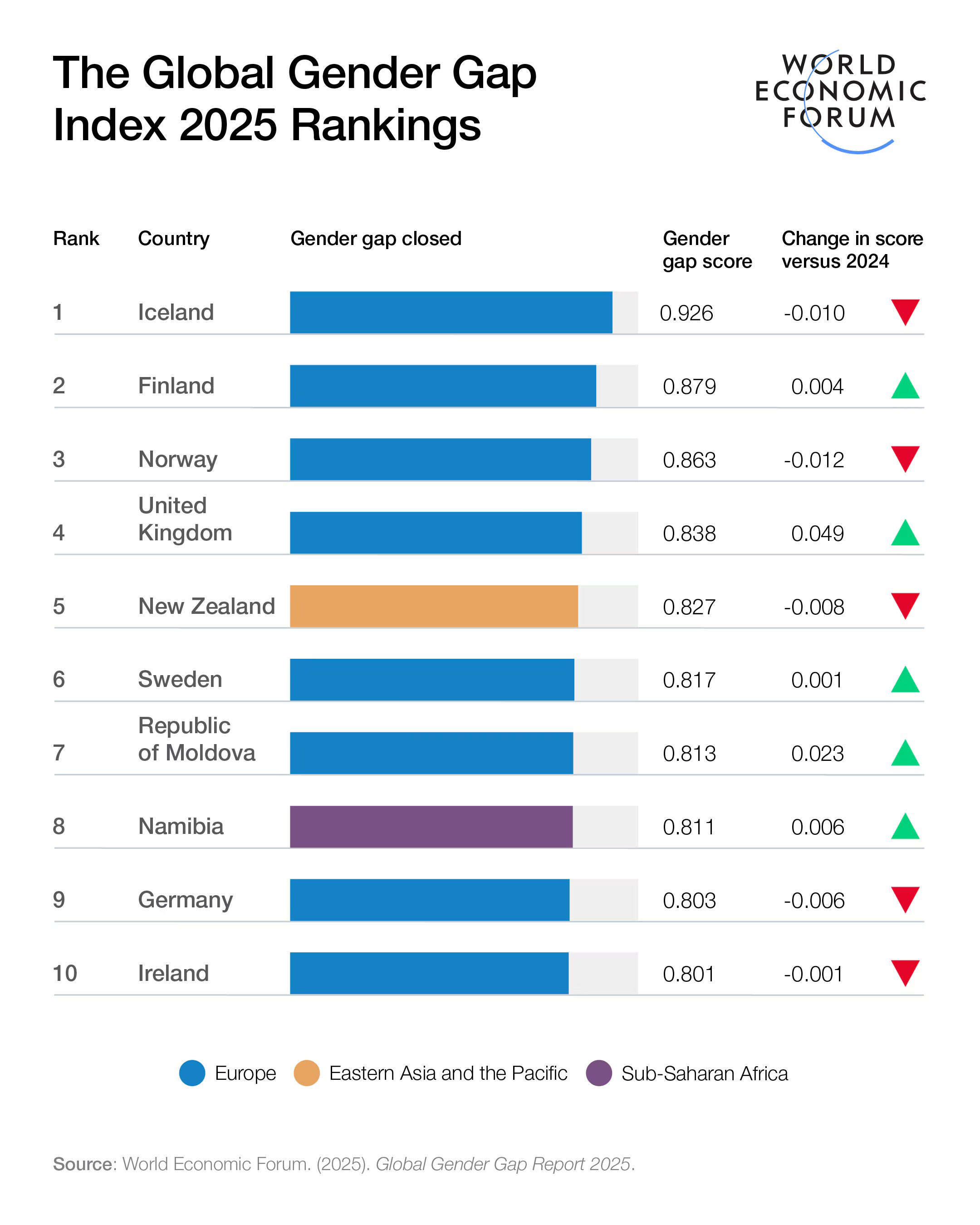
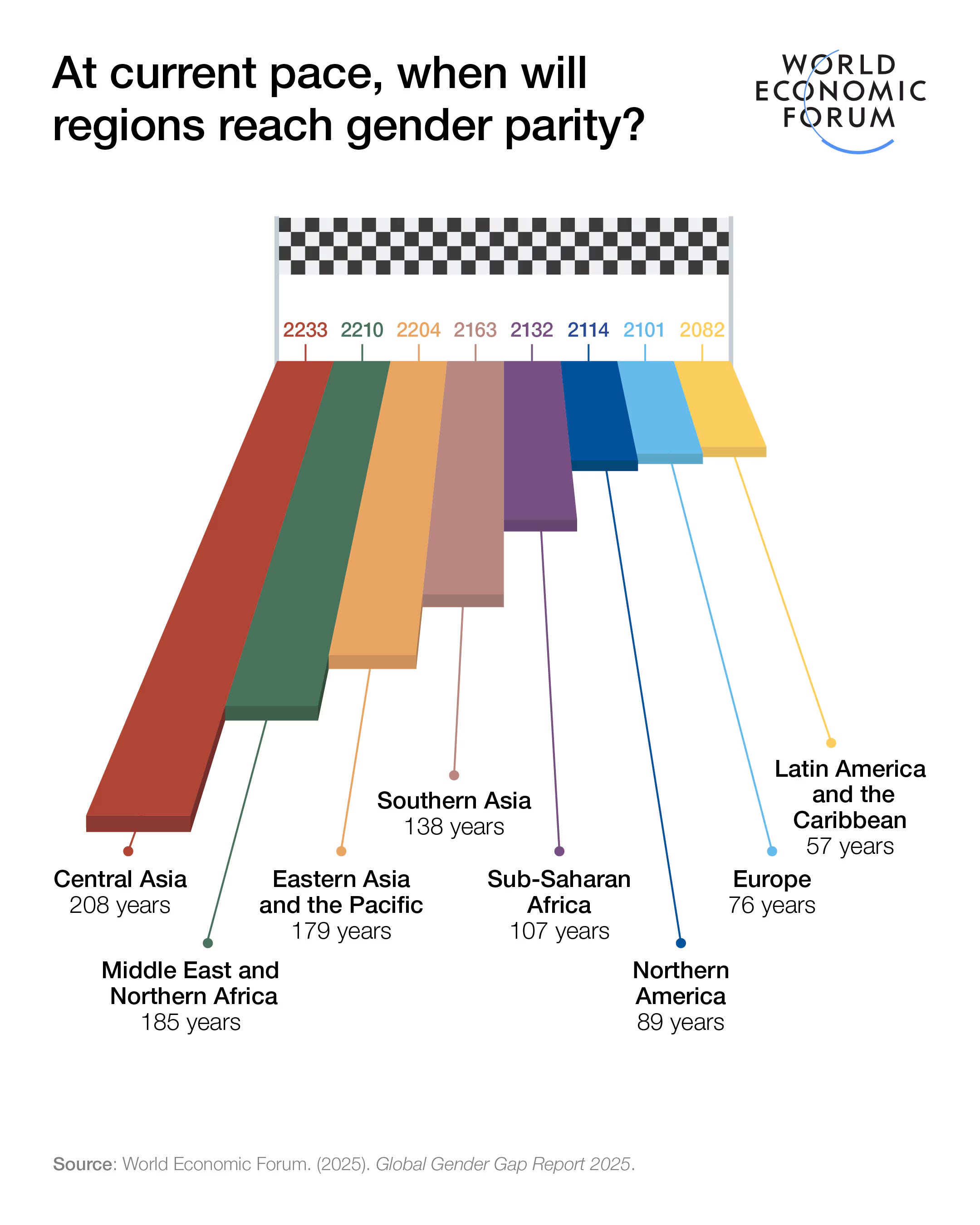
Not one. The ten worst countries in the world for women span Hindu-majority nations, atheist-majority nations, Muslim-majority nations, and Christian-majority nations. Patriarchy does not belong to any one religion, culture, or geography. It is a global infrastructure—built over millennia, maintained through law and custom and violence—that operates across every border and every faith tradition. And at the current rate, we are generations, even centuries away from gender parity.
A UN Women UK survey found that 71% of women of all ages reported experiencing sexual harassment in a public space. A survey of women in Paris found that 100% reported being sexually harassed by men in public. Almost 9 in 10 women in some cities around the world feel unsafe in public spaces.
This is not a cultural pathology of any particular group. This is the condition of being a woman on Earth in 2026.
The Solutions
I want to be precise here. Every solution I propose places the burden of change on men, governments, and institutions—not on women. Women have endured absurd lectures for generations that it is on them to solve this problem. That they must dress differently, walk differently, drink differently, trust differently. These are not solutions. These are victim management strategies. These are not sustainable. They are weak band aid solutions to massive lacerations. We need actual structural change—here’s what that structural change looks like.
1. Declare Gender-Based Violence Against Women a Federal Public Health Crisis
This designation is not merely symbolic. It unlocks funding, resources, and institutional attention at a scale that current frameworks do not permit. That funding should be directed toward thousands of new domestic violence shelters—safe, warm, welcoming, and equipped to support women and their children. The data is clear that the most dangerous moment in a domestic violence situation is when a woman attempts to leave. About 75% of domestic violence incidents occur at that moment. When a woman suffering abuse knows—with certainty—that she has a safe place waiting for her and her children (if any), that calculus changes. Lives are saved.
This declaration should also be used to elevate women to positions of leadership at every level of government and civil society. Studies consistently demonstrate that the more women leaders a nation has, the less likely that nation is to resort to violence to resolve conflicts. The Council on Foreign Relations reports:
The presence of women in positions of leadership can greatly reduce the likelihood of violent conflict emerging as well as the prospects for the peaceful resolution of existing conflicts.Research has shown that countries with greater gender equality are more likely to resolve conflicts without violence and are less likely to use military force to resolve international disputes. Conversely, countries with more significant gender gaps are more likely to be involved in inter- and intrastate conflict.
Thus, more women leading to more peace is not a coincidence. It is causation. We need more of it.
2. More Women-Only Spaces, Funded By Taxpayer Money
Women have already built private solutions—women-only gyms, women-only taxi services, the option to choose a female physician. These are good. They are also inaccessible to women who cannot afford them. The data is unambiguous that girls learn better in environments where boys are not present to harass them. A recent study found:
Girls who attend all-girls schools get better exam results than girls with similar records and backgrounds at mixed schools – and outdo boys at all-boys schools – according to research. While girls’ schools have long been known to outperform other types of school in England, the analysis by FFT Datalab found that even after adjusting for background characteristics there was an unexplained boost for pupils at girls’ schools, equivalent to 10% higher GCSE grades in 2023. In contrast, boys at all-boys schools received no exam boost compared with their peers at mixed schools.
Taxpayer money currently does not fund public schools to afford girls to such a positive environment. Public funding should therefore be available for girls-only public schools—not as a privilege available only to families who can afford private education, but as a genuine choice available to every family, in every income bracket, in every community.
3. Universal Healthcare With Full Coverage of All Women’s Health Needs
Every health service, every reproductive care option, every menstruation product that a woman or girl needs to live with dignity and full health should be covered—completely, without copay, without political interference, without the approval of a predominantly male legislature deciding which parts of women’s bodies deserve coverage. Studies show that women with access to comprehensive healthcare have lower rates of illness, higher rates of overall health, and longer lifespans. This should not be controversial. It is arithmetic.
The United States is the only developed nation on Earth that does not guarantee healthcare as a human right. Accordingly women in America suffer the lowest life expectancy of any developed nation on Earth, suffer the highest maternal mortality of any developed nation on Earth, and as mothers suffer the highest rate of infant mortality of any developed nation on Earth. And we do so while spending double per capita of every developed nation on Earth that guarantees healthcare as a human right.
Any politician today that still opposes universal healthcare as a human right is telling you they value corporate profits more than women’s life, health, and safety.
4. UBI, Tax Cuts, & $0 College for Women—As Restitution
For the first 198 years of this nation’s existence, women were systematically denied financial autonomy. Until 1974 when the Equal Credit Opportunity Act finally became law, women in America could not own property, could not open bank accounts, could not access credit, could not vote, and could not hold office in any meaningful way equal to men. Two centuries of deliberately enforced financial exclusion does not simply vanish when legal barriers are removed. It compounds—through inheritance, through wealth gaps, through the structural disadvantages that accumulate across generations.
The United States government owes women restitution for those 198 years. We can accomplish this in many ways. I’ll propose just one that I have reflected over. At birth, every girl is assigned an account receiving $1,000 annually, pegged to interest, accumulating until she turns 18—at which point she receives her restitution account and can roll it into a 401(k) or access it directly. This is not a radical idea. Congress nearly passed UBI under President Nixon. That proposal failed not due to concerns about cost, but due to a targeted disinformation campaign—one that, not coincidentally, centered specifically on concerns about women’s independence. Opponents cited a study claiming that giving women financial independence would destroy homes and lead to divorce. Not only was the entire study made up, the fact that the mere idea of women’s independence frightened weak men so much is perhaps the strongest argument in favor of women’s independence.
Another option—women pay no federal income taxes for the first 40 years of their adulthood. Sound radical? Why? After all, the US Government denied women financial autonomy for 198 years—why is a mere 40 years to help diminish that harm not a bare minimum? Indeed, such an act would be a compromise, but enough to ensure women could join the workforce as adults without the additional financial burden imposed upon them after centuries of financial oppression.
Third, women pay no college tuition, ever. It would be a massive step towards free public college, a wildly popular proposal, and it would prioritize the demographic most denied throughout American history.
Each of these tactics, and there are many more we can conceive, works to undo the harm men have imposed upon women for centuries, and does so while placing the responsibility on men, governments, and institutions—not on women. How do we pay for it? By taxing the major corporations, billionaires, and industries who profited massively off of women’s free labor for centuries. This is not a cost issue. The feasibility is clear. The moral case is overwhelming. The only remaining question is political will.
5. Mandatory, Age-Appropriate Consent Education for Boys—Beginning in Elementary School
This is perhaps the most important intervention on this list, because all of the structural changes above can only go so far without changing the culture that produces male violence in the first place.
Every elementary, middle, and high school in America should mandate a weekly class on consent, accountability, and healthy relationships—designed specifically for boys, beginning in the earliest grades. These classes should ensure that consent is not a concept introduced awkwardly in a one-time high school assembly. Rather, as a value woven into the fabric of how boys understand themselves and their relationships from childhood forward.
We fund driver’s education because we understand that operating dangerous machinery without training causes harm. Male entitlement, without challenge, causes harm on a scale that dwarfs traffic accidents. The investment in early, sustained, mandatory education cannot be optional. It is the foundation upon which everything else must rest.
Notice what is absent from this list. At no point have I asked women to do better. Women are not the problem. The problem is male violence, male entitlement, male silence, and the male-constructed systems that protect all three. The solutions are accordingly directed at governments, institutions, and men.
These are not high bars. They are basic requirements of a society that takes human dignity seriously.
A Word to the Men Who Are Already Angry
I know some of you stopped reading several paragraphs ago. Others may be composing their response right now—something about false accusations, or not all men, or what about male victims.
I have addressed the “not all men” deflection before and I will address it again here: you do not get a cookie for not being a rapist. That is the floor of basic human decency, not an achievement worthy of recognition. The men who rush to announce their personal non-violence the moment this conversation begins are doing exactly what this culture trained them to do—center themselves rather than confront the problem.
And to the men who witness this violence, who know something is wrong, who have a friend or a brother or a colleague whose behavior they have excused or overlooked or rationalized away: it is your problem. It is absolutely, unequivocally, entirely your problem. Male violence does not survive without male silence. Every man who watches and says nothing is not a neutral bystander. He is a participant in a system that protects predators at the direct expense of survivors.
Get therapy. Do the internal work. Hold the men in your actual life accountable—not just the monsters in the headlines, but the ones at your dinner table, in your locker room, in your group chat. Refuse to be silent when you know something is wrong.
To the Women Reading This
You already know everything I have written here. You have been navigating these realities your entire life—calculating risk, adjusting behavior, making hundreds of daily decisions designed to keep yourselves safe from us.
I am not writing this to tell you something new. I am writing it because you deserve to have men say it plainly, publicly, and without qualification: the burden of this crisis is not yours to carry. It never was. The responsibility for male violence belongs to men—to the men who commit it, to the men who enable it, and to the men who stay silent rather than confront it in themselves and each other.
You deserve safety. You deserve spaces designed with your security as the priority. You deserve a legal system that treats your assault as a crime rather than an inconvenience. You deserve a government that funds your health, your shelter, and your financial autonomy as a matter of right rather than charity.
Until men get the help, the accountability, and the fundamental transformation in values that this crisis demands—protect yourself, protect each other, and know that the fight for your safety is also the fight for the soul of our society.
This Is Not Sustainable
Let me close with the truth that everyone in this conversation—even the men who are angry right now—must eventually reckon with.
Half the world are women—all the world are her children.
A civilization in which one in three women are sexually assaulted, in which 98% of rapists face no consequences, in which nine out of ten women murdered by men are killed by someone they trusted, in which women cannot walk through a city without being harassed, in which every single country on Earth fails to achieve gender equity—that civilization is not stable. It is not healthy. It is not just.
It is destroying itself.
The normalization of male violence against women is not a women’s problem that men can afford to ignore. It is a civilizational crisis that will continue to compound—producing broken families, traumatized communities, radicalized young men, and generation after generation of women whose full human potential is constrained by the constant, exhausting, inescapable work of staying safe.
Men, we built this. Which means men must dismantle it.
The solutions exist. The data is clear. The moral case is overwhelming. The only question remaining is whether enough men will choose accountability over ego, structural change over comfort, and the full humanity of women over the privilege of never having to think about this at all.
Choose correctly. The stakes for the future of human society could not be higher.
Qasim Rashid is a human rights attorney, author, and host of Let’s Address This — a platform dedicated to human rights, accountability, and the justice our society demands. Subscribe, share, and let’s remain relentless in our mission for a more perfect Union.
.
I'm not responding as someone who simply appreciated your article because it's timely or relevant.
I'm responding as a woman in her seventies who was part of the first wave of work in the late 1970s to confront domestic violence head-on, and who spent ten years working in a battered women's shelter.
I'm responding as the young woman whose husband beat her, choked her unconscious, dislocated her jaw, and left her to raise her children alone, in hiding, trying to survive.
I'm responding as the young woman who sought help from an attorney, only to discover he was more interested in taking me to dinner and telling me how pretty I was—bruises and all.
I'm responding as the little girl who was called to her father's bed far too often.
I'm responding as the girl whose friend's father tried to force his tongue into her mouth.
I'm responding as the young woman whose boss told her to follow him to a "meeting" in his car.
And I am not unique.
I carry these stories, but I also carry the stories of countless women who have whispered, confessed, and finally found the courage to say, "Me too."
For decades we were told to stay quiet. To be polite. To get over it. To move on. To stop making people uncomfortable.
The truth is, some wounds never completely heal.
I still don't fully trust men. I still don't always feel safe in this world. I still carry damage that no apology, no court ruling, no passage of time has ever erased.
So when I read your words, I cried.
Not because they fixed anything. Not because they erased what happened.
But because, for a brief moment, I felt seen.
For a brief moment, I felt less alone.
For a brief moment, there was hope, and comfort, and the possibility that maybe someone finally understood.
And for that, I thank you.
Thank you Qasim for raising the relevant issues. Women are not safe and every excuse we see in the comments isn't a funny little joke. As with so many social justice issues, people generally can't see through their own bias. So, having independent media like Let's Address This is the only way we can possibly open some minds to the prevailing facts. Thank YOU