


Did you know that last year Congress enacted approximately $1 trillion in cuts to Medicaid?
Those who championed these cruel cuts framed them as technical budgetary decisions—necessary tradeoffs, fiscal discipline, or long-term structural reforms. But as a human rights lawyer, I have long emphasized that budgets are not neutral instruments. They are moral documents that reflect what we value, who we protect, and whose lives we are willing to place at risk. When a government chooses to cut funding for programs that sustain human life and dignity, the consequences are not theoretical. They are immediate, measurable, and profoundly human.
We are now beginning to see those consequences unfold across the country. And it is not pretty. Corporate media is failing to adequately report on this, or provide guidance on how to fight back. We cover both in this article. Let’s Address This.
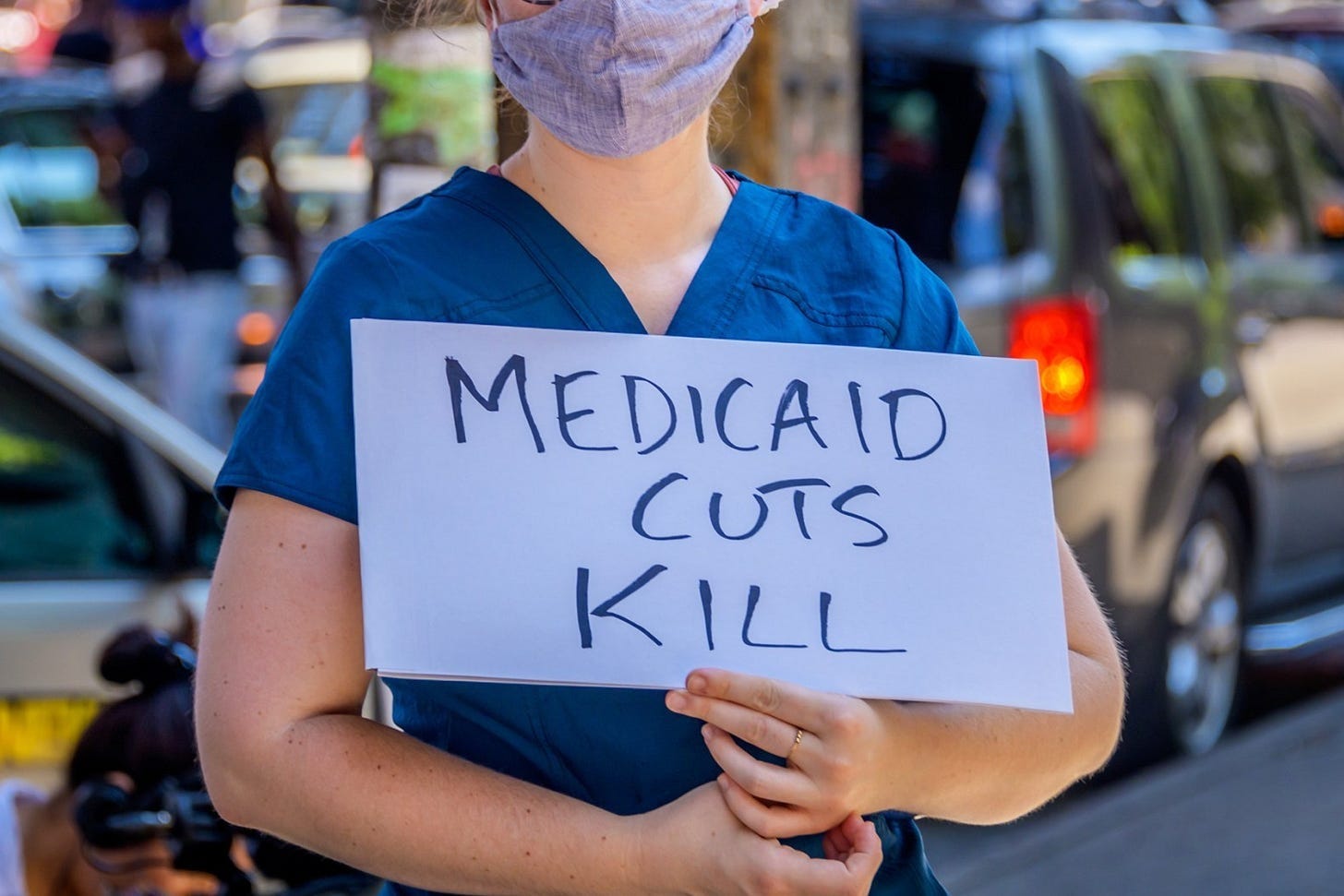
Access to Medicaid Is Life or Death for Millions
Medicaid is not a peripheral program. It is one of the foundational pillars of care in the United States. It provides health coverage, long-term care, and home-based services to tens of millions of people, including older adults, people with disabilities, children, and families caring for loved ones. It also sustains an essential care workforce—individuals who provide daily support that allows others to live safely, independently, and with dignity. Because Medicaid operates as a federal-state partnership, cuts at the federal level most certainly cascade down to the states, forcing policymakers into untenable decisions. States must either absorb massive funding gaps—often without the fiscal capacity to do so—or reduce services that people rely on for survival.
Increasingly, we are seeing states forced into the latter, and we are all worse off for it.
The Collapse of Medicaid
At least ten states have already proposed or begun implementing reductions to home and community-based services (HCBS). HCBS are programs that allow individuals to receive care in their homes rather than being institutionalized. For example, in Idaho, state leadership has proposed sweeping reductions to Medicaid services, including cuts to HCBS programs that many families depend on to care for loved ones. In California, policymakers have proposed cuts to In-Home Supportive Services, the state’s largest HCBS program, alongside burdensome work reporting requirements that risk stripping coverage from vulnerable populations under the guise of administrative oversight.
These are not marginal policy adjustments. They are decisions that determine whether people can remain in their homes, whether caregivers can continue providing support, and whether individuals with disabilities can maintain autonomy over their own lives. When these services are reduced or eliminated, the consequences are immediate and severe—families are destabilized, individuals are forced into institutional settings, and already strained systems are pushed closer to collapse.
The Broader Impact of Defunding Medicaid
The impact is not limited to home-based care. Hospitals across the country are already experiencing significant strain. More than 750 healthcare providers are at risk of closing, have already closed, or have been forced to scale back essential services, with rural hospitals facing particularly acute vulnerability. When a rural hospital closes, the consequences extend far beyond inconvenience. Entire communities lose access to emergency care, maternal health services, and basic medical treatment. Conditions that might otherwise be manageable become life-threatening, not because of medical complexity, but because of systemic neglect.
It is critical to understand that these outcomes are not accidental. They are the predictable result of deliberate policy choices.
I repeat—it does not have to be this way.
The American people recognize this. That’s one reason why across the country, people are refusing to accept those choices as inevitable.
The People Fight Back
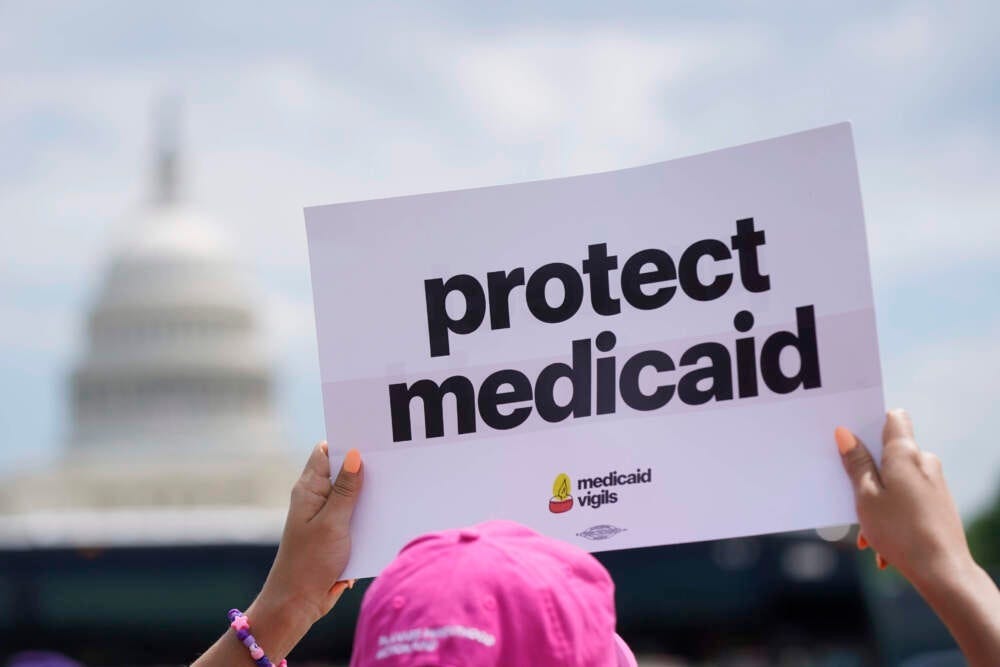
In Colorado, for example, proposed cuts included caps on family caregiver hours and reductions in Medicaid reimbursement rates for those caregivers. Families who rely on these services responded by sharing their lived experiences—detailing what those cuts would mean in practical terms: lost care, increased hardship, and in some cases, the inability to safely support loved ones at home. Their testimony was not abstract or theoretical; it was grounded in lived reality. And it was powerful enough to force the state to pause those proposed cuts.
That moment is instructive. It demonstrates that public policy does not exist in a vacuum and that when people articulate the real-world consequences of legislative decisions, those in power are sometimes compelled to respond.
It is also important to recognize that not every state has chosen the path of austerity.
Some states have acknowledged the severity of these federal cuts and have taken proactive steps to protect their residents. In New Mexico, lawmakers established a Medicaid Trust Fund in 2025 to create a financial buffer against federal reductions. In Michigan and Washington, policymakers are actively considering new revenue mechanisms—including targeted taxes on ultra-wealthy individuals—to preserve funding for essential services.
These approaches reflect a fundamental truth that is too often obscured in national discourse: the issue is not whether resources exist. The issue is whether there is political will to allocate those resources in a way that prioritizes human well-being over concentrated wealth.
At a time when billionaires continue to benefit from expansive tax advantages and corporate profits remain historically high, it is neither economically necessary nor morally defensible to reduce access to health care and long-term care for the most vulnerable members of society.
The Bottom Line: Healthcare Is A Human Right
From a human rights perspective, access to health care, long-term care, and basic support services is not optional. It is integral to the dignity and autonomy of individuals and communities. It is a human right. When Medicaid is weakened, the burden does not disappear—it is shifted onto families, caregivers, and local systems that are already operating at their limits. The result is not efficiency. It is harm.
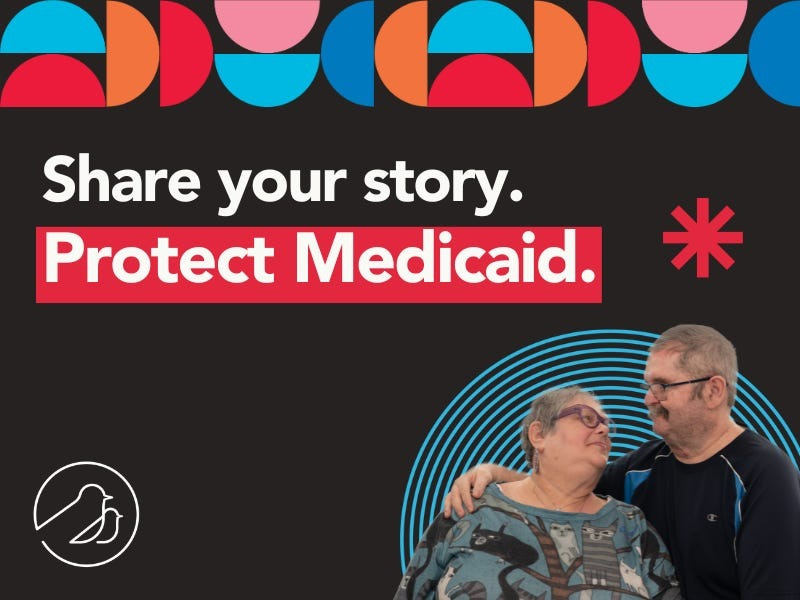
This is why it is so important that people share their stories.
When individuals and families speak about how Medicaid supports their lives—they help transform policy from abstraction into reality. They make it impossible to ignore the human consequences of political decisions. Take a moment to watch Sarah’s powerful story.
Sarah’s story is important, and tragically all too common. And I need you to step up and share your story, too.
If you or someone you care about has been affected by these cuts, your voice is not only valid—it is necessary. I would love for at least 500 of our readers to take a minute and submit their story on why we must protect Medicaid.
Your experience can help ensure that elected officials are confronted with the real impact of their decisions and that the narrative around Medicaid reflects the truth: that it is not simply a line item in a budget, but a lifeline for millions of people.
You can also follow the ongoing work of the amazing organization known as Caring Across Generations (Caring Across Generations — Instagram), who is dedicated to protecting and strengthening care systems across the country.
We are at a moment that demands clarity and conviction.
We can continue down a path in which public programs are systematically weakened to accommodate tax structures that disproportionately benefit the wealthy, or we can insist on a framework in which public resources are used to sustain care, dignity, and human life.
But that choice will not be made passively.
It will be made by those willing to speak, to organize, and to demand that our policies reflect our values. I’m raising my voice, and I invite you to do so as well.

Any cuts to any healthcare services is absolutely unacceptable! How can everyone stay healthy if healthcare costs an arm and a leg? As Bernie Sanders so often says, “Healthcare is a human right.”
amen..Maga is a direct assault to humanity and the Republican party has chosen to be a criminal organization to protect the very criminal leaders from going to jail esp the top orange one for vile crimes against children all others and humanity..and earth ...