


Here’s some good news for a change—and a reflection of what happens when organized people unite to beat organized money. Just eight days into Mayor Zohran Mamdani’s administration, New York City has already delivered what corporate media and political cynics spent months mocking as impossible: a concrete, fully funded pathway to universal childcare.
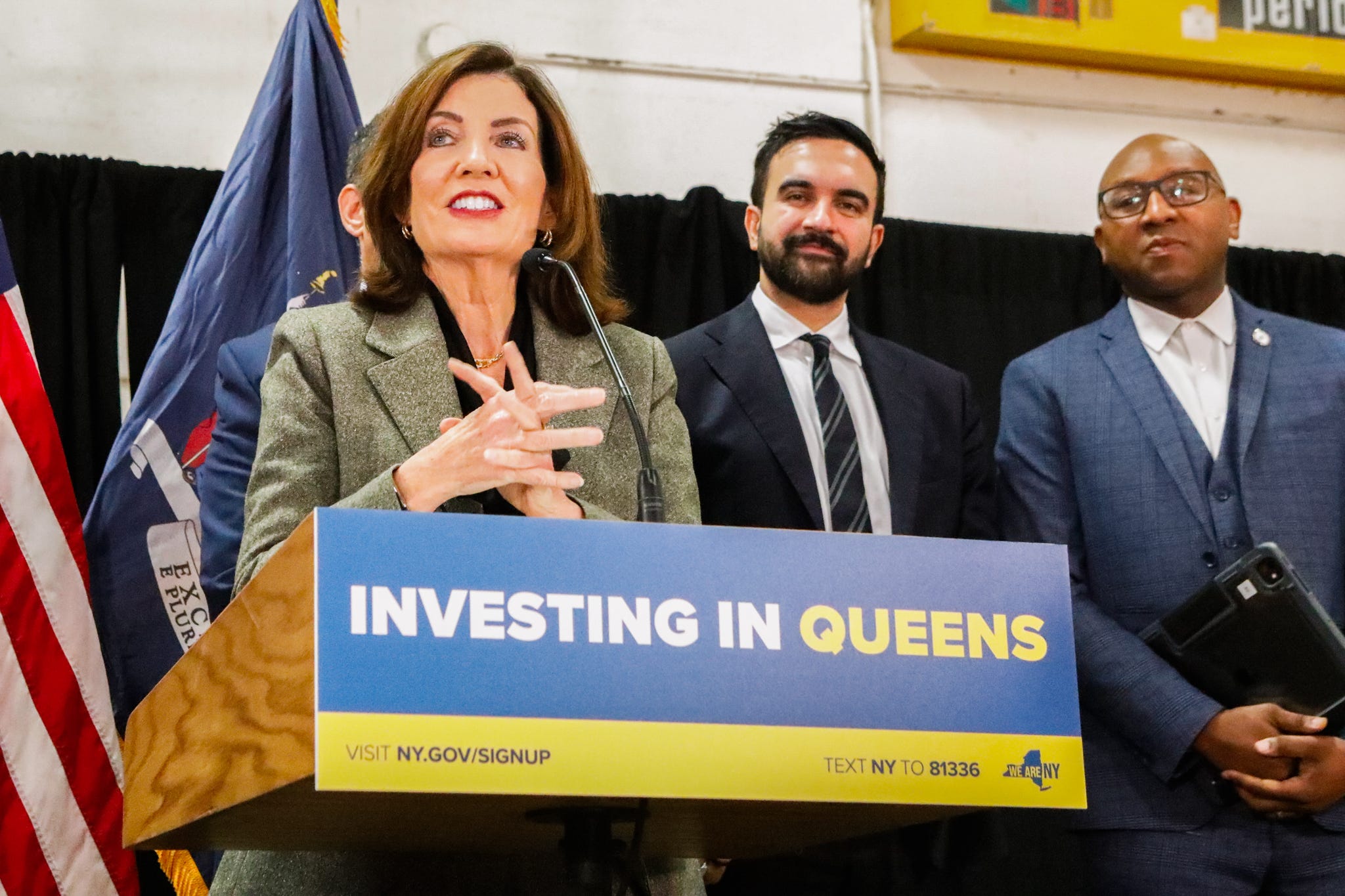
This week, Mayor Mamdani and Governor Kathy Hochul announced two full years of state funding for universal childcare, marking the first major plank of Mamdani’s affordability agenda officially locked in. Free childcare for children up to age two will roll out first, with a clear roadmap to extend coverage through age four. This is not a symbolic gesture or a pilot program designed to quietly disappear. It is a structural commitment, backed by billions in state dollars, and designed to scale. Unsurprisingly, the attention given to this win appears infinitesimal compared to the criticism lobbied at the proposal. But it’s critical we understand what happened, because if this critical policy of guaranteed childcare can make it in New York, it can make it anywhere. Let’s Address This.
A Promise Made—and Already Being Kept
For months, Mayor Mamdani’s critics insisted this could never happen. They said Albany would block it. They said Governor Hochul would never work with him. That billionaires would flee and bankrupt the city. They said democratic socialism collapses the moment it meets budget math. Those voices are now conspicuously silent—because the facts have rendered their cynicism obsolete.
Childcare was not a footnote in Mamdani’s campaign. It was central. He spoke about it on doorsteps, in community centers, at labor halls, and in conversations with elders who have watched generations of families pushed out of the city by impossible costs. He and his campaign knocked on countless doors, mobilized more than 100,000 volunteers, and built a multiracial, multigenerational coalition around a simple truth: working families cannot thrive if childcare is treated as a private luxury instead of a public good.
Eight days in, that promise is no longer theoretical.
At the announcement, Governor Hochul made clear both the scale and seriousness of the commitment:
So we’re today, we’re working together with the mayor at this incredible place to announce the first major steps to make childcare universal, truly universal, here in New York City… We’ve invested… about three and a half times what it was when I first became governor… $8 billion in child care already. We know that this is a determinative factor on whether or not a family who wants to stay in New York or come to New York… can make it work. It also affects our businesses… people need childcare because they’re going to a job, they’re part of our economy, part of our productivity.
This framing matters. Childcare is not charity. It is infrastructure. It is economic policy. It is workforce policy. And it is family policy.
Coalition Over Ego
Just as significant as the policy itself is how it came together. Early reporting framed Hochul and Mamdani as adversaries. The easy narrative was conflict. The harder—and more honest—story is collaboration rooted in shared accountability to working people. Governor Hochul described the turning point candidly:
Back in November, fresh off the election, we sat down… and I told him this: whatever the city was ready to deliver, I would be his partner 100% of the way. And today, I’m proud to announce that New York state is paying the full cost to launch universal daycare… We’re not just paying for one year… we’re committing for the following year as well, to show you, we’re in this for the long haul.
Credit is due on both sides. Mamdani built the organized demand. Hochul met it with institutional power. That is what responsive government looks like when ego takes a back seat to outcomes.
Organized People Beat Organized Money
This moment is also proof of something many insist is no longer true: organized people can still beat organized power.
Corporate interests did not want this. Childcare privatizers did not want this. Political consultants told candidates for decades that universal childcare was too expensive, too risky, too ambitious. What they really meant was that it threatened a status quo built on scarcity and exhaustion. Mayor Mamdani’s movement rejected that premise. It replaced rugged individualism—the lie that families should “figure it out on their own”—with the warmth of collectivism. And government responded.
This is also a rebuke to the culture of political mediocrity that has hollowed out public trust. For too long, we’ve been told to lower expectations, to accept incrementalism that never arrives, to applaud leaders for merely acknowledging a crisis rather than solving it. This announcement sends a different message: government can work for us when we demand that it does.
One-Third of the Affordability Agenda—Locked In
Childcare is one-third of Mamdani’s affordability agenda. And now, it’s a lock.
This commitment will roll out over the next year and a half, with implementation details forthcoming. It joins ten executive orders already signed to protect civil rights and support working families. That pace is not accidental. It reflects a governing philosophy rooted in urgency—because families do not have the luxury of waiting.
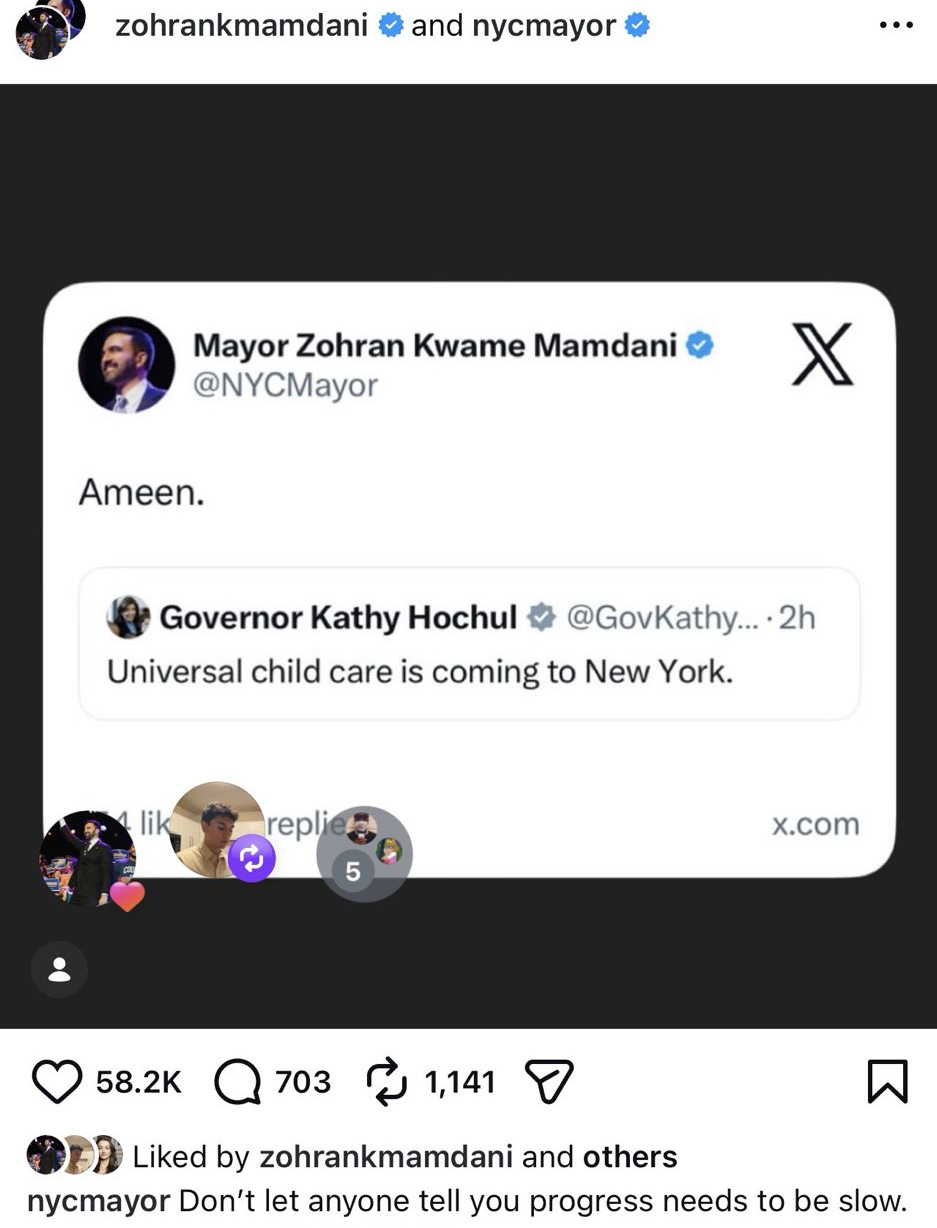
As Mamdani said in response to this landmark announcement from Governor Hochul, “Don’t let anyone tell you progress needs to be slow!”
The Silence Speaks Volumes
In closing, I need to call out corporate media, who spent months ridiculing this vision. They called universal childcare unrealistic. They called it unserious. They called it ideological. Now that it’s happening—with funding, timelines, and bipartisan cooperation—they have little to say.
That silence is telling.
Because this announcement does not just expand childcare. It opens up a world of opportunity for young parents to become better providers for their children. That opens up innovation and strengthens our economy. It provides more access to women, particularly low-income women. This single change already challenges an entire political narrative that says bold policy is incompatible with competent governance. It proves that when leaders stop apologizing for wanting basic human dignity—and start organizing to achieve it—results follow.
And the best part? This is not the end of the fight. It is the beginning of a model.
A proven model where people organize, government responds, and promises are kept. A model where affordability is not a talking point but a measurable outcome. A model that New York City is now showing can work—and one that working people across the country are watching closely.
Childcare is no longer a dream in New York City. It is becoming a reality.
And rumor has it, zero billionaires have fled New York City in protest.
P.S. For those wondering what else Mayor Mamdani has already accomplished his first week on the job, here’s a non-comprehensive list.
Mayor Zohran Mamdani: First Week in Office — Delivering Results
Day One (Jan 1): Setting the Direction
Appointed Mike Flynn as Transportation Commissioner, advancing commitments to safer streets, faster buses, and accessible transit.
Delivered inaugural address outlining a governing vision centered on affordability, dignity, and working families.
Issued executive orders resetting City Hall governance and formally establishing the Mamdani administration.
Revitalized the Mayor’s Office to Protect Tenants, appointing Cea Weaver as director.
Launched SPEED and LIFT Task Forces to accelerate housing construction on city-owned land and cut red tape.
Toured bankrupt Pinnacle Group properties, signaling direct intervention on behalf of tenants.
Jan 2: Reforming Access and Accountability
Appointed Ali Najmi as Chair of the Mayor’s Advisory Committee on the Judiciary.
Signed an executive order making the judicial selection process more transparent and accessible.
Created the Mayor’s Office of Mass Engagement (OME) to transform how New Yorkers interact with City Hall.
Appointed Tascha Van Auken as Commissioner of the new OME.
Jan 3: Infrastructure and Moral Leadership
Announced completion of the McGuinness Boulevard redesign, including protected bike lanes and traffic calming.
Condemned President Trump’s strikes in Venezuela, reaffirming support for New York’s Venezuelan community.
Jan 4: Housing and Tenant Protection
Appointed housing leader Dina Levy as Commissioner of Housing Preservation & Development.
Signed an executive order launching “Rental Ripoff” hearings to confront abusive rent practices.
Rode the free Q70 LaGuardia Link bus and spoke directly with riders about transit access.
Jan 5: Emergency Response and Consumer Protection
Responded to a five-alarm Bronx fire with an emergency press conference.
Signed executive orders cracking down on junk fees and deceptive subscription practices.
Joined Governor Hochul to mark one year of congestion pricing and highlight its success.
Announced three new judicial appointments.
Issued emergency orders enforcing jail standards, shelter laws, and advancing the ban on solitary confinement.
Jan 6: Public Safety, Housing Intervention, and Governance
Responded to a five-alarm fire in Queens.
Joined state leaders to present year-end 2025 crime statistics.
Worked alongside DOT crews to fix the Williamsburg Bridge.
Swore in Lillian Bonsignore as Fire Commissioner.
Intervened to pause the bankruptcy sale of over 5,000 rent-stabilized Pinnacle Group apartments to protect tenants.
Jan 7: Civil Rights and Policy Leadership
Appointed Christine Clarke as Chair of the Commission on Human Rights.
Appointed Simonia Brown as Senior Advisor for Policy and Strategy.
Held a press conference with new media outlets, reinforcing transparency and accessibility.
Qasim, this gave me chills. Especially on a day after we were shown, in unmistakable terms for those in the back who haven’t been listening, that ICE can murder any of us. At any time. Just for being in the vicinity of an ICE agent. WITH ZERO CONSEQUENCES. This system, which isn’t broken but working exactly as intended, can indeed be dismantled and replaced with something that works for people. Mayor Mamdani gives us all hope today. And this is this especially heartening, because, as always, the corporate media worked overtime to say that Governor Hochul would not work with Mayor Mamdani after he took office.
Thank you for sharing this news. It’s an inspiring reminder to all of us that good things are also happening, and we need to fight to keep them happening.