


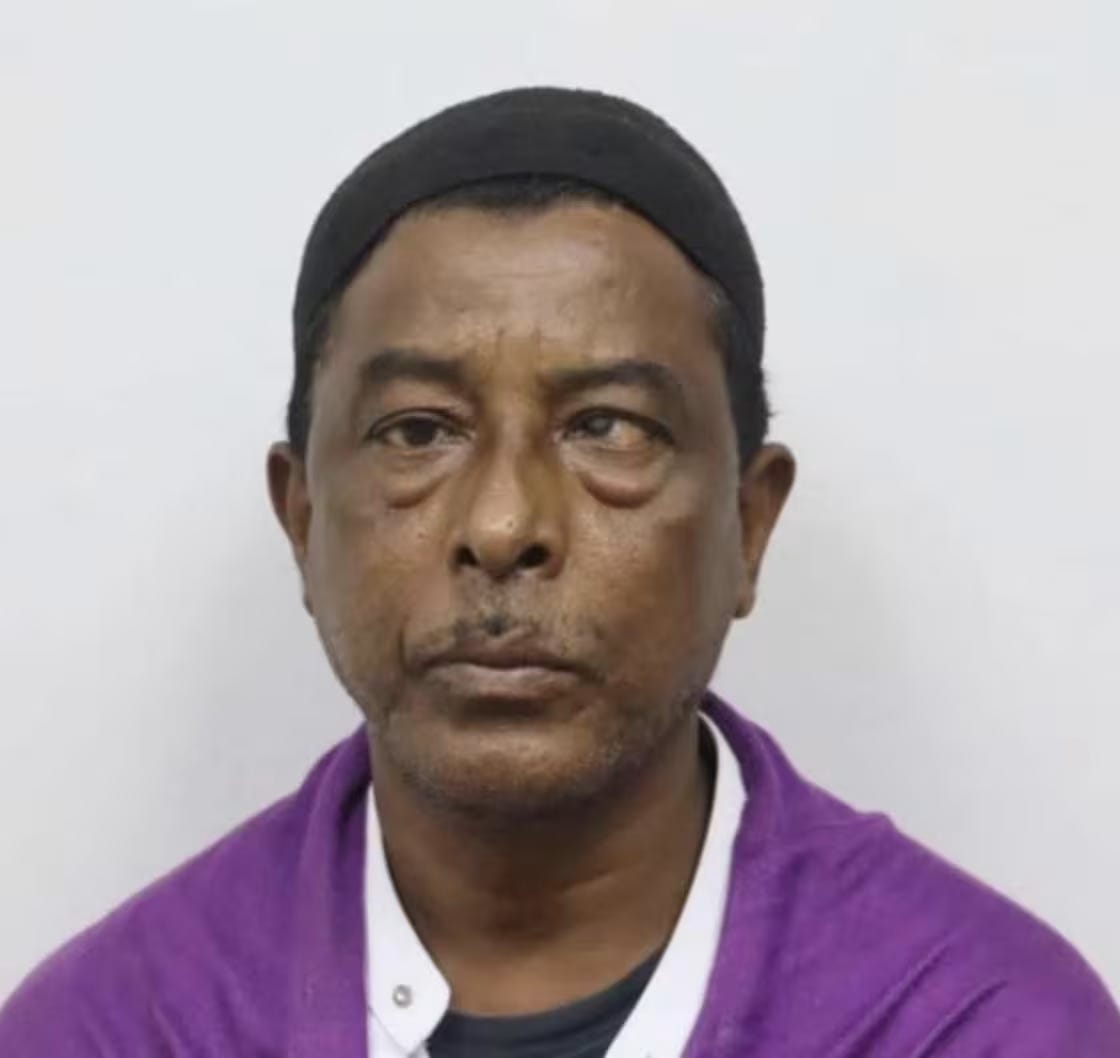
Nurul Amin Shah Alam was a 56-year-old blind Muslim refugee who survived genocide enabled by an American company (Facebook), only to die at the hands of the United States government (DHS) during the Muslim holy month of Ramadan. As an observant American Muslim human rights lawyer who has spent extensive time supporting Rohingya refugees, I cannot tell you how much this devastates me. And while DHS predictably denied any wrongdoing, video evidence proved them wrong.
Let’s Address This.
Expendable Black and Brown Lives
During Donald Trump’s recent State of the Union, he provided numerous examples of what many call violence porn. Examples of innocent people suffering horrible injury and deaths at the hands of someone who happened to be an immigrant. This was deliberate. It is his attempt to malign all immigrants for the actions of a few—never mind the indisputable fact that throughout the last 150 years, immigrants have always had a lower crime rate than US citizen. Meaning, the more immigrants in your community, the safer it is.
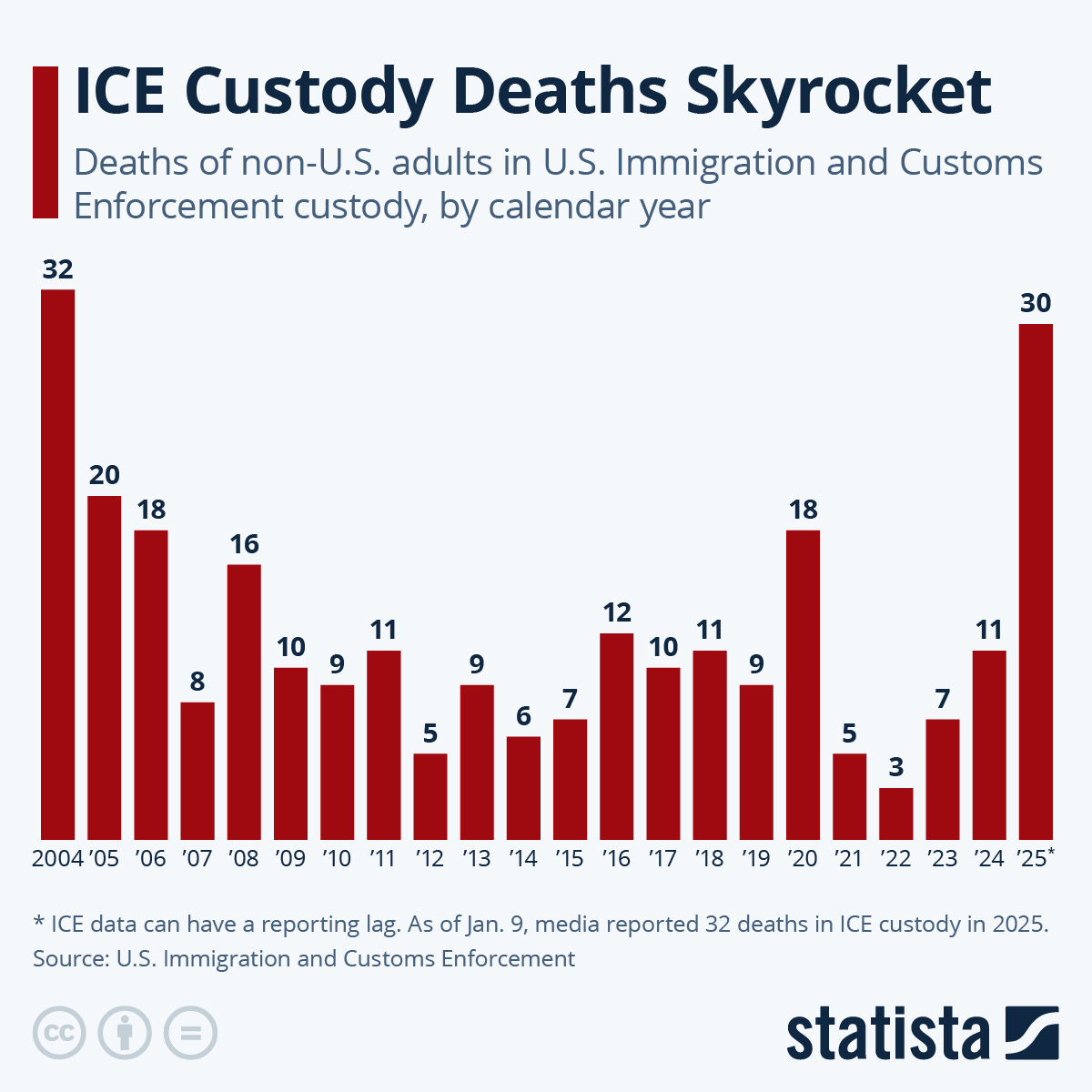
But what you did not hear from Donald Trump are the significantly higher cases of violence and death inflicted upon immigrants at the hands of ICE and DHS. No mention of Keith Porter, Renee Good, or Alex Pretti—all shot to death by ICE agents. No mention of Parady Law, who died mysteriously in a Federal detention center. And no mention of Nurul Amin Shah Alam, who died abandoned and alone on a brutal Buffalo winter night. Indeed, Trump refuses to acknowledge that under his term, deaths in ICE and DHS custody are at historic highs.
Nurul Amin Shah Alam’s story is one of tragedy and devastation—and one that must be told.
What Happened to Nurul Amin Shah Alam
Last week in Buffalo, Border Patrol agents detained a Rohingya refugee named Nurul Amin Shah Alam. He was legally present in the United States as a documented immigrant. He spoke almost no English. He was blind. There was no lawful basis to deny him his constitutional rights. Yet DHS took him into custody anyway. Days later he was found dead, alone, on a frozen Buffalo night.
When agents ultimately determined that he was legally present in the United States, the obligation was clear: ensure his safe release and return home. Instead, DHS chose an approach that can only be described as callous indifference to human life. Nurul Amin was released alone, in freezing temperatures, in a random Tim Horton’s parking lot. He was not returned to the county facility from which he had been taken. His family was not contacted. His lawyer was not notified. He was not escorted home, despite living only a few miles away. A blind man, in sub-freezing Buffalo weather, was left to fend for himself.
DHS then compounded the cruelty with deception. Officials publicly claimed that he had been taken to a “safe and warm location.” Security footage later demonstrated that the referenced coffee shop lobby was closed. He was not safe. He was not warm. He was alone outside in 20ºF weather in the middle of a Buffalo winter.
On Tuesday, Nurul Amin Shah Alam was found dead.
State Violence Against People With Disabilities
Often lost in this conversation is the significantly higher risk of injury or death people with disabilities face when interacting with US law enforcement agencies. Amin Shah was nearly blind and faced the wrath of an agency with blind indifference to human rights or to his disability. And it cost him his life. According to the Urban Institute, the data is devastating:
One-third to half of police use-of-force incidents involve a person with a disability, and half of the people killed by police have a disability. Ableism in the criminal legal system results in significant harm to disabled people. Many behaviors and activities associated with disabilities are criminalized. This can result in dangerous police encounters, often exacerbated by police who lack the training and tools to help people in crisis, don’t recognize or understand disability, and rely on “command and control” tactics and excessive physical force for noncompliance. The intersection of racism and ableism add up to a higher risk of arrest, other forms of physical and mental harm, and even death for Black disabled people when they encounter police.
If this were an isolated incident, it would still demand immediate investigation and accountability. But it is not isolated. It reflects a broader pattern in which Black and brown immigrants, non-English speakers, and people with disabilities are treated as disposable within a system that consistently deprioritizes their humanity. When disability, language barriers, racial identity, and immigration status converge under a militarized enforcement regime, the risk compounds dramatically.
This Much Is Clear - Abolish ICE and DHS
Indeed, Shah Alam’s story presents yet another devastating reminder that the conversation can no longer center on “reforming” ICE or DHS. We need abolishment.
And for those who insist on mere reform, how do you reform systemic rape, murder, and torture? This is the same enforcement apparatus that has been linked to thousands of documented complaints of child sexual abuse in immigration custody. It is the same agency repeatedly accused of systemic rape of detained women and torture of detained men, including credible allegations of genital mutilation and other forms of cruel and degrading treatment. It is the same agency that has accumulated record numbers of detention deaths and constitutional violations. These are not anomalies; they are recurring outcomes. And it is this structure itself that is incompatible with constitutional governance and basic human rights.
Abolishing ICE is not a slogan. It is a recognition that structural violence cannot be cosmetically repaired. We must replace ICE and DHS with systems of true public safety. And true public safety requires investment in communities, adherence to due process, and institutions designed around preservation of life rather than assertion of power. It requires an immigration system rooted in civil administration and human rights, not paramilitary enforcement.
Conclusion
Nurul Amin Shah Alam did not die because of an unavoidable accident; he died after being unlawfully detained, abandoned in freezing temperatures, and misrepresented in official statements by the very agency charged with upholding the law. In any other context, such grotesque conduct would trigger investigation for criminal negligence resulting in death, if not reckless homicide. That it occurred under the authority of DHS does not mitigate its gravity—it intensifies the urgency of accountability. Nurul Amin deserved to return home safely that night. He deserved dignity, lawful treatment, and the most basic recognition of his humanity. His death is not merely a tragedy; it is evidence. And that evidence leads to a conclusion many elected officials still refuse to confront: when an agency repeatedly produces abuse, deception, and preventable death, it is not simply flawed or in need of reform—it is structurally incompatible with justice and must be dismantled.
they murdered him... and should be prosecuted according 🍸
The people who left him in the cold intended for him to perish. It is first degree murder and must be treated as such if the U.S. ever gets a DOJ that follows laws. Can the state prosecute the murderers until then?