

This week, the Supreme Court handed down four significant rulings that will have wide-reaching impacts on your rights, your safety, and the lives of millions of people across this country. Corporate media covered each of them in isolation, buried in legal jargon, stripped of the context that makes them comprehensible and the stakes that make them urgent.
That ends here. This is your non-legalese analysis of what happened, how these rulings impact you, and what to expect going forward. Let’s Address This.
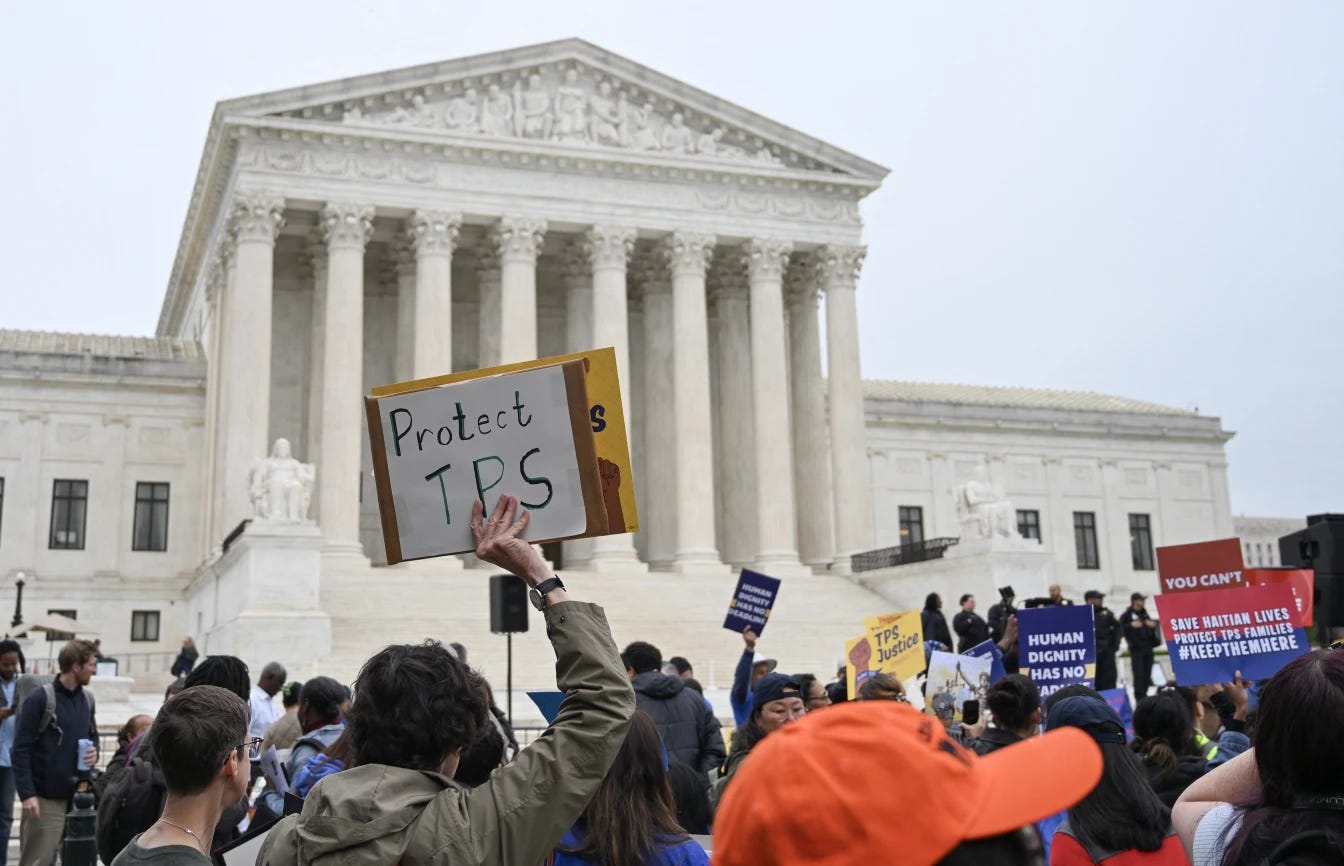
RULING ONE: Mullin v. Doe (6-3)
The Trump Administration Can Expel 700,000 Haitians and Syrians—And No Court Can Stop It
The conservative majority ruled that the Trump administration can end Temporary Protected Status (TPS) for migrants fleeing violence and natural disasters in Haiti and Syria—and that courts cannot review the federal government’s decisions regarding TPS. Full stop. No judicial check. No accountability. No recourse.
To understand why this is so infuriating, you need the history that the ruling’s supporters will never volunteer.
TPS exists because Congress failed to act. President Obama championed a straightforward, logical, bipartisan-backed immigration reform bill that would have created a durable legal framework for people fleeing exactly the kinds of crises—natural disasters, gang violence, political persecution—that TPS was designed to address. Republicans refused it. They blocked it. They manufactured a crisis by refusing to solve it—and then turned around and weaponized that same crisis to fuel anti-immigrant hysteria for the next decade.
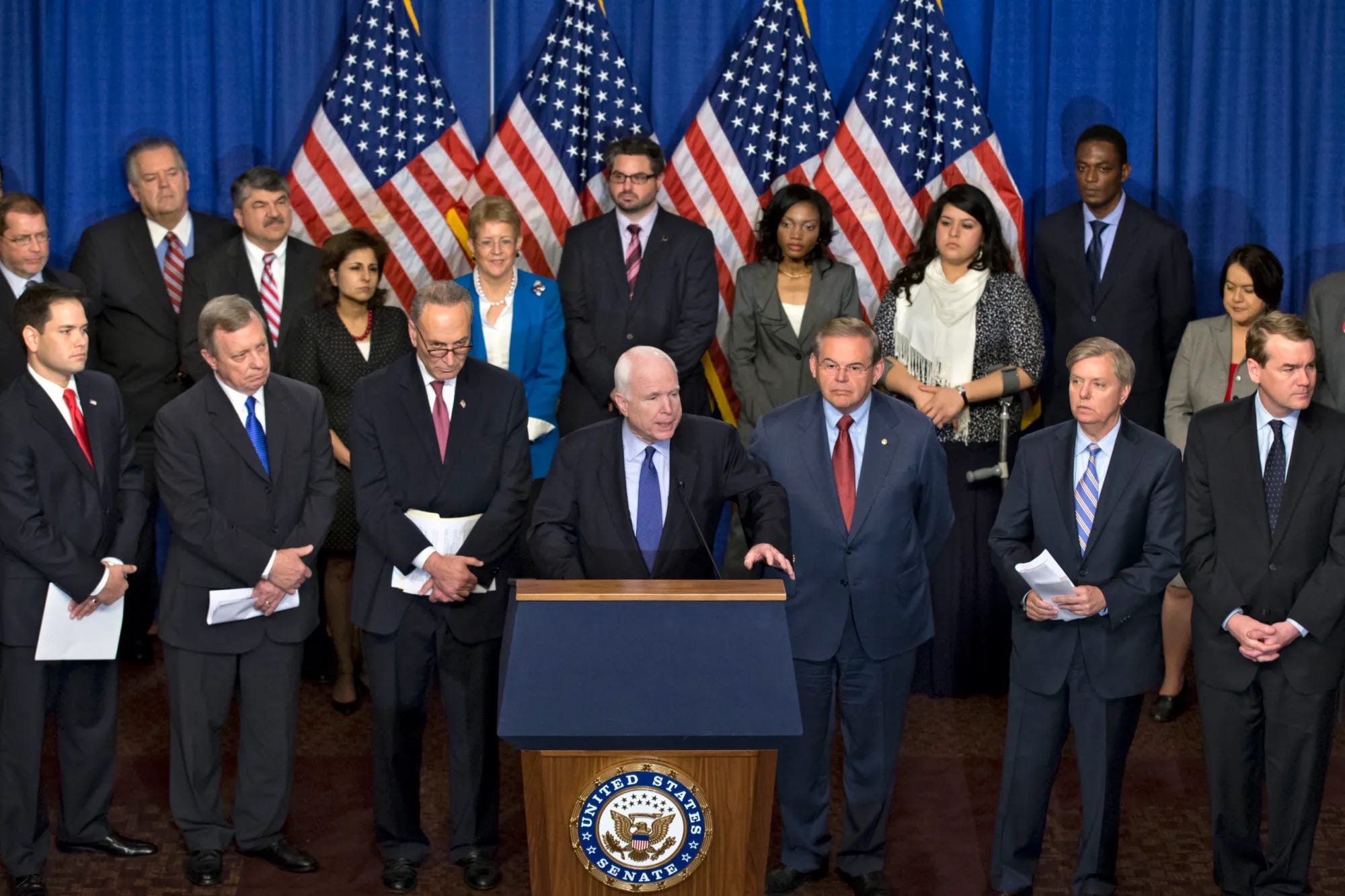
TPS was not a radical workaround. It was a Band-Aid on a wound that Republicans refused to let heal. And now the same movement that created the problem is using the Supreme Court to rip off the Band-Aid and pour salt in the wound—affecting hundreds of thousands of families who have built lives, raised children, paid taxes, and contributed to their communities here legally.
The human cost of this ruling will be devastating—not just for the families directly affected, but for the local economies, hospitals, schools, and communities that depend on their presence and their labor.
And then there is this: Supreme Court Justice Amy Coney Barrett has two Black Haitian children whom she adopted.
Today, she ruled to expel 700,000 Haitians who were here legally.
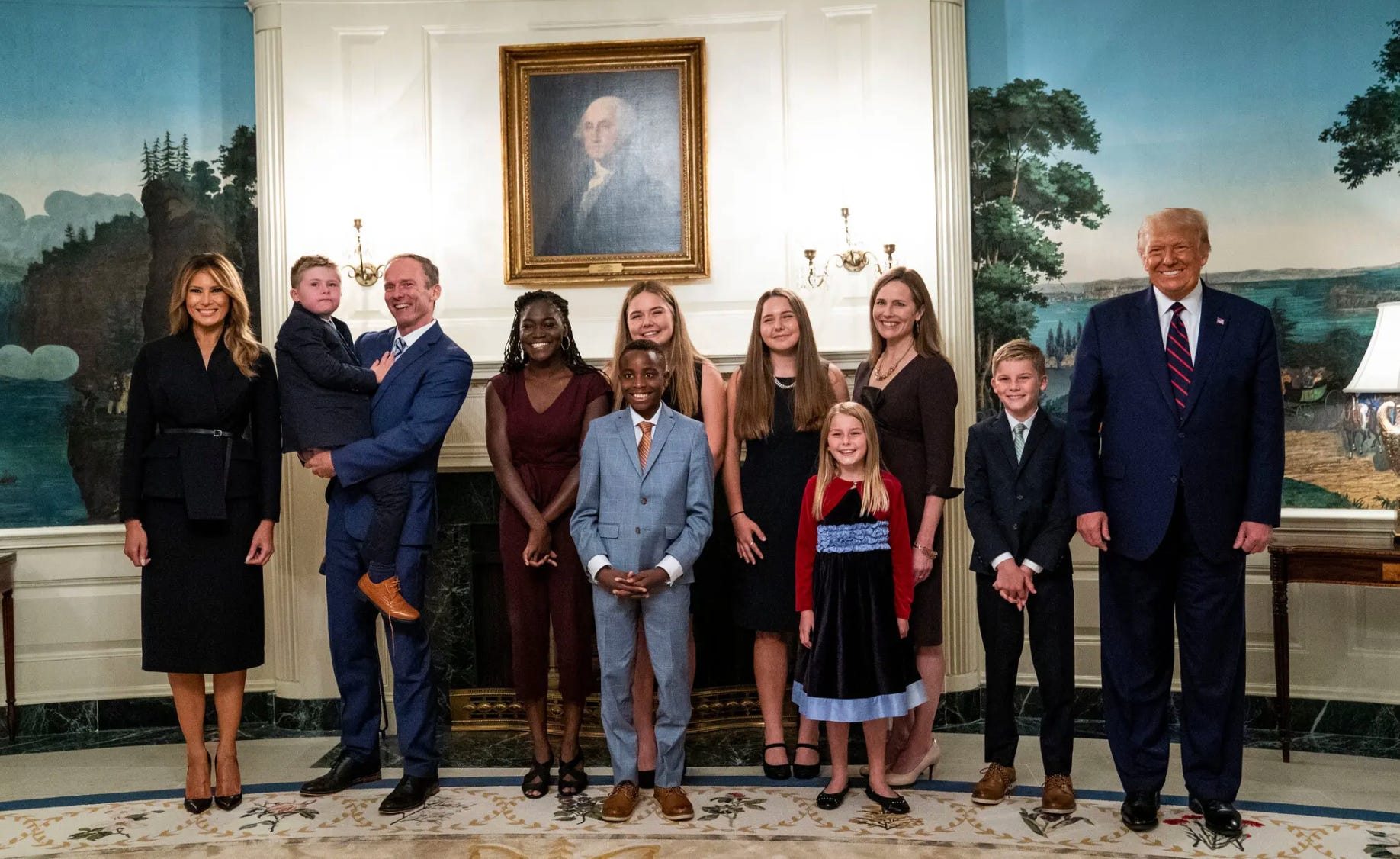
Here’s the painful lesson once more. Proximity to whiteness and white supremacy is not protection from white supremacy. Proximity to Black and brown people is not exemption from being a white supremacist. Amy Coney Barrett adopted two Black Haitian children and then voted to expel their countrymen and women from the United States. The ideology does not make exceptions for personal relationships.
Meanwhile, racial disparity could not be more clearly. While demanding deportation of 700,000 Black Haitians, the Trump regime continues to fast-track asylum for white South Afrikaners on the manufactured, evidence-free claim of “white genocide”—a debunked conspiracy theory that has been adopted wholesale as official United States immigration policy. The message is stark and racist: if you are white and fleeing a country the administration dislikes, the door is open. If you are Black and Haitian or Syrian and Arab, the door is not just closed—the Supreme Court has now ruled that no court can make them open it.
Our immigration system has always been built on white supremacy. This ruling did not create that reality. It simply made it more explicit than it has been in decades.
RULING TWO: Monsanto Co. v. Durnell (7-2)
Cancer Victims Lose. Monsanto Wins. Again.
The Court ruled 7-2 that Monsanto is shielded from cancer victims suing over Roundup—its widely used herbicide that has been linked to non-Hodgkin’s lymphoma and other cancers in thousands of documented cases. Federal pesticide law, the Court held, blocks states from requiring cancer warnings on labels beyond what the EPA has already approved.
Once again: corporations over people. Once again: when it suits the right-wing majority, “states’ rights” simply do not apply.
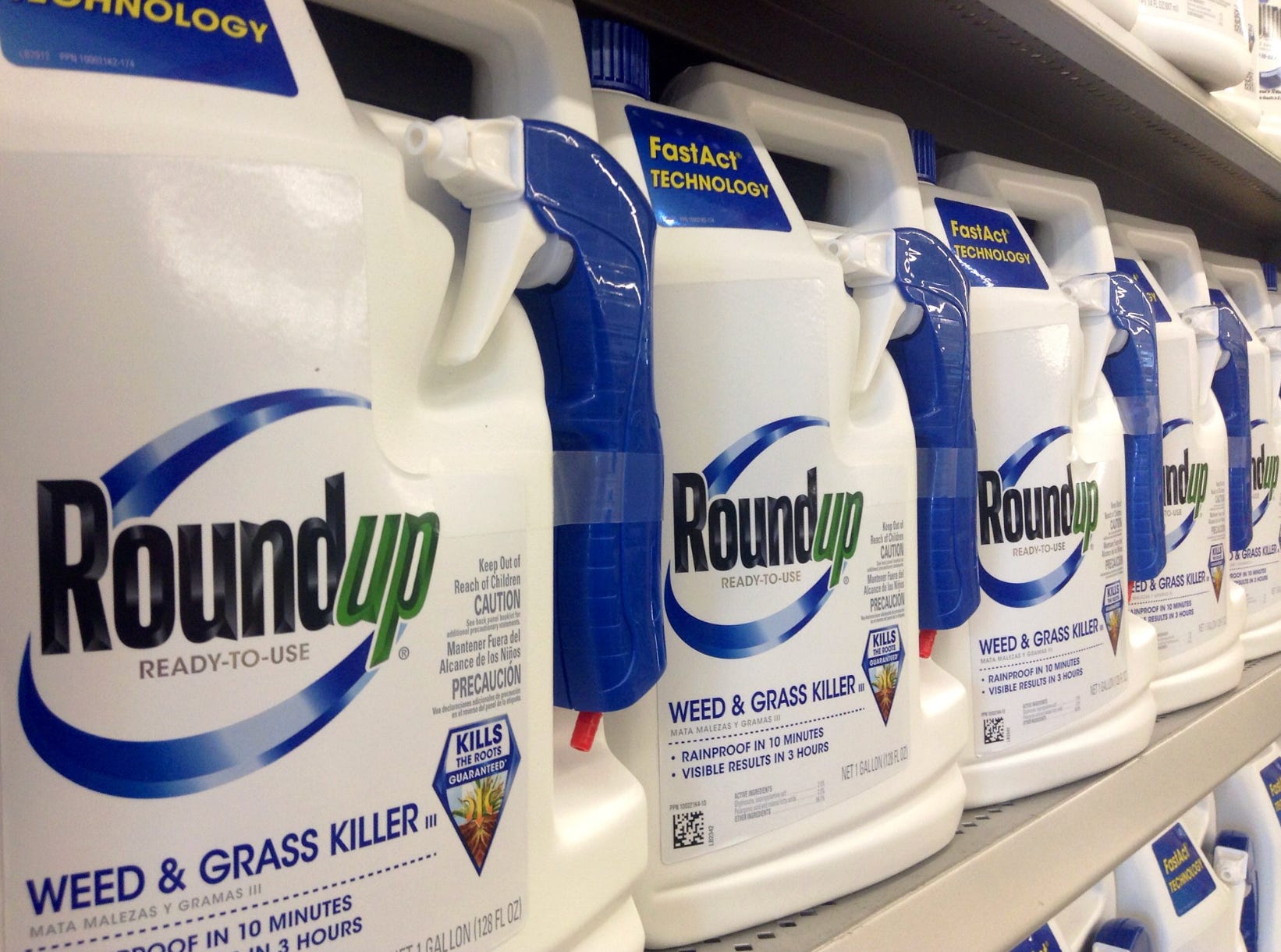
This is a pattern worth naming directly. The same conservative legal movement that invokes states’ rights to justify stripping abortion access, restricting voting, gutting LGBTQ protections, and eliminating gun safety regulations—suddenly discovers that states have no sovereignty whatsoever the moment a state tries to protect its residents from a corporation’s toxic product.
States’ rights, it turns out, are only sacred when they are being used to take rights away from individuals. The moment a state exercises its sovereignty to protect its own people from corporate harm, the federal preemption doctrine appears like magic and the states’ rights argument evaporates entirely.
And in a nation that does not guarantee healthcare as a human right—where a cancer diagnosis can mean financial ruin even with insurance, and death without it—this ruling is not merely a legal technicality. It is another brick in the architecture of what I have previously described as structural eugenics: a system that decides, through policy and law, whose lives are worth protecting and whose are acceptable losses in the pursuit of corporate profit.
Monsanto’s parent company Bayer has faced tens of thousands of Roundup cancer claims. Juries across the country—including a Georgia jury that awarded nearly $2.1 billion to a single cancer victim—have found the evidence compelling enough to hold the company accountable. The Supreme Court has now told those juries, those victims, and every American who works with pesticides: the law does not protect you. It protects Monsanto.
RULING THREE: Wolford v. Lopez (6-3)
Hawaii Tried to Protect Its People from Gun Violence. The Supreme Court Said No.
The Court struck down Hawaii’s law requiring permission to bring firearms into private property open to the public—stores, restaurants, hotels, and similar spaces.
Hawaii passed this law because the evidence demanded it. Every study in existence shows that more guns in public spaces does not decrease gun violence. It increases it. Hawaii looked at that evidence, exercised its democratic authority, and enacted a law designed to protect the people who live, work, and visit there.
The Supreme Court struck it down.
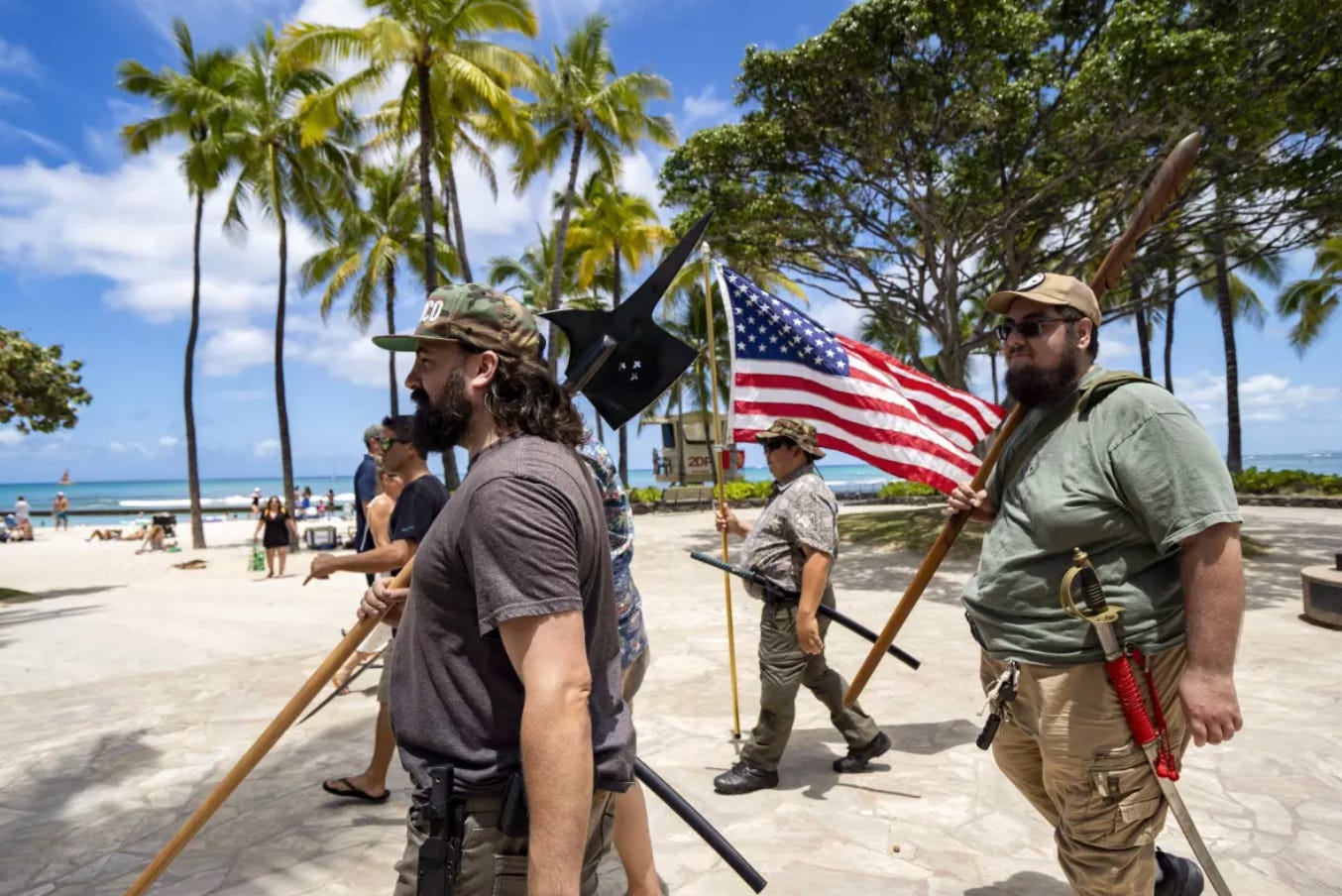
Once again, states’ rights apply when states are restricting rights. They do not apply when states are protecting them. And once again, the people who will pay the price for this ruling are not the justices in their protected chambers. They are the restaurant workers, hotel employees, and ordinary shoppers in Hawaii who now have no legal recourse against someone who decides to bring a loaded firearm into the space where they spend their days.
Gun violence is now the leading cause of death for children in America. House Republicans have repeatedly voted to ban the CDC from even studying gun violence and gun deaths. And the Supreme Court just struck down a state law designed to make public spaces safer.
The Second Amendment absolutism being practiced by this Court is not constitutional interpretation. It is a political ideology that prioritizes the unfettered presence of firearms over the documented, measurable safety of human beings. And it is killing people.
RULING FOUR: Mullin v. Al Otro Lado (6-3)
If You Haven’t Crossed the Border Yet, You Have No Right to Asylum. The Court Just Ended Asylum in America.
This is the ruling that I find most grotesque—and as a human rights lawyer who has worked with asylum seekers for nearly twenty years, I do not use that word lightly.
A valid asylum claim begins by arriving in the United States and making that claim. The applicant is then afforded due process of law, as the Constitution requires, and their case is heard on the merits. Those who meet the strict criteria receive asylum. Those who do not are slotted for deportation proceedings. This has been the law since the aftermath of WW2. This week, the Court ruled that asylum seekers stopped at the border or turned back into Mexico have not legally “arrived” in the United States—and therefore have no right to apply for asylum.
In other words, rather than process asylum claims, the Supreme Court denied the very mechanism for asylum in the first place.
Thus, if you are fleeing gang violence, political persecution, or a government that is actively trying to kill you, and you make it to the United States border, the Supreme Court has now ruled that you have no legal right to ask for protection—because technically, you haven’t stepped far enough onto American soil.
This is not a technicality. This is the effective end of asylum as a legal right in the United States.
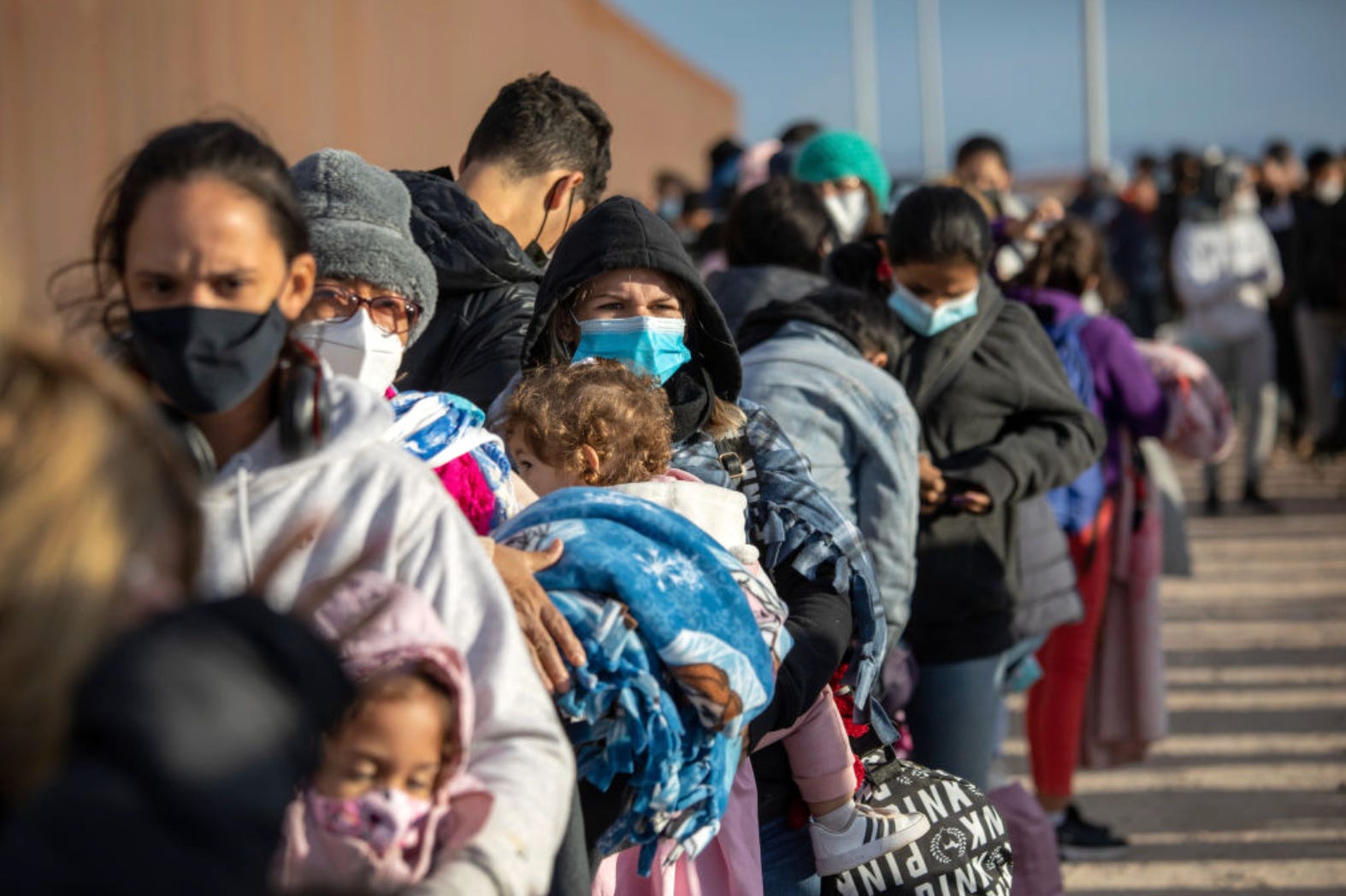
The right to seek asylum is not a policy preference. It is a human right—codified in international law after World War II specifically because the United States and other Western nations had spent years turning away Jewish refugees fleeing the Holocaust, consigning them to death by denying them sanctuary. (See the SS St. Louis tragedy). The architects of the post-war international order looked at what the world had done—looked at what America had done—and said: never again. They built a legal architecture to ensure that people fleeing persecution would have somewhere to go.
I have spent nearly twenty years working with the human beings that architecture was designed to protect. I have sat across from men, women, and children who fled unimaginable violence and made desperate journeys to reach the United States—not because it was easy, not because they wanted to leave their homes, but because they had no other choice. I have watched them navigate a system designed to exhaust and discourage them. I have celebrated with them when they were granted protection. I have wept with them when they were not.
This ruling will mean more of the latter. Far more.
The Trump regime has enacted the same pre-Holocaust cruelty that the right to asylum was designed to prevent—turning away the desperate, the persecuted, and the endangered at our border—and now the Supreme Court has blessed that cruelty with constitutional authority.
We should be ashamed. And we should be organizing.
What Comes Next
The Supreme Court has delivered a wave of rulings this week that reshape the legal landscape and chip away at fundamental rights for hundreds of millions of Americans. None of these rulings happened in a vacuum. They are the product of a decades-long, billionaire-funded, carefully coordinated campaign to reshape the federal judiciary—packing it with ideologically committed justices who will deliver these outcomes regardless of precedent, regardless of democratic will, and regardless of human cost.
Do not expect this to stop. Look for Trump and the MAGA Republican movement to build on these victories and continue their systematic assault on civil rights. I would not be surprised if the Supreme Court moves next to repeal protections on birthright citizenship—a right with centuries of constitutional precedent—because precedent has demonstrably not constrained this Court when ideology demands otherwise.
The path forward is not despair. It is organization—more urgent, more strategic, and more sustained than anything we have done before. It means electing people-funded progressive candidates in every remaining primary. It means building the kind of political infrastructure that can eventually reshape the Court itself. It means showing up for every election at every level.
I will continue to share these updates, these analyses, and these calls to action—because an informed public is the prerequisite for an organized one. If you are not yet a paid subscriber to Let’s Address This, this week is the argument for becoming one. This work exists because you fund it. And right now, it has never mattered more.
Stay loud. Keep pushing. The fight continues—and so must we.
Qasim Rashid is a human rights attorney, author, and host of Let’s Address This—a platform dedicated to human rights, legal accountability, and the plain-language analysis that corporate media refuses to provide. Subscribe, share, and let’s remain relentless in our mission for a more perfect Union.
This is one of your most important and heartbreaking articles, Qasim. I'm so happy you mentioned the SS St. Louis tragedy, which I doubt many people know about. It defines the term "cold-hearted". I've read so many people on sm talking about returning to the "American Way" and this is "unAmerican". No, what we're seeing now is very much "the American way" on steroids. Not according to our Constitution, but according to centuries of fact. If people think voting for progressives like Zohran Mamdani is radical, scary, then they are NOT truly seeing and hearing the FACTS of the REAL SCARY shit going on around them in our government and courts. Because someone said it on TV, radio or in the newspaper does NOT mean it is fact. Propaganda exists in America too.
These decisions are so depressing. Clearly insane, partisan with no tie to logic or precedent