


After promising to serve as the “President of Peace,” Donald Trump has now bombed eight different sovereign nations and taken out two heads of state—Maduro of Venezuela and Khameni of Iran. As the war now expands regionally, early reports indicate that Israeli and U.S. bombing has killed at least 200 Iranian civilians, and Iranian responses on U.S. military bases have killed three U.S. service members. Trump announced their deaths and added, “that’s what happens, and there will probably be more.” His callousness and cruelty is surpassed only by his arrogance and incompetence. I’ve received hundreds of DMs, emails, and comments from readers asking for more clarity on the current situation, how they can best support the Iranian people, and how we can ensure the information we consume is accurate. So, I reached out to the experts on Iran I rely on, and am sharing their wisdom below.
Let’s Address This.
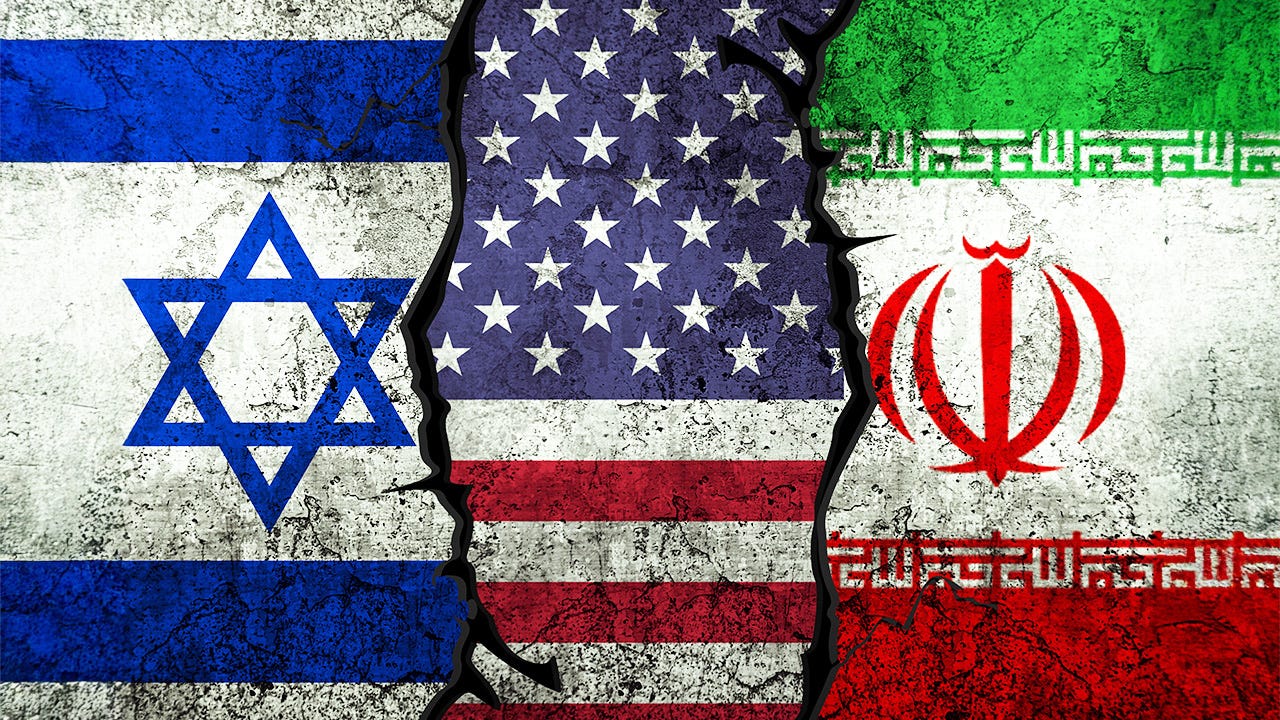
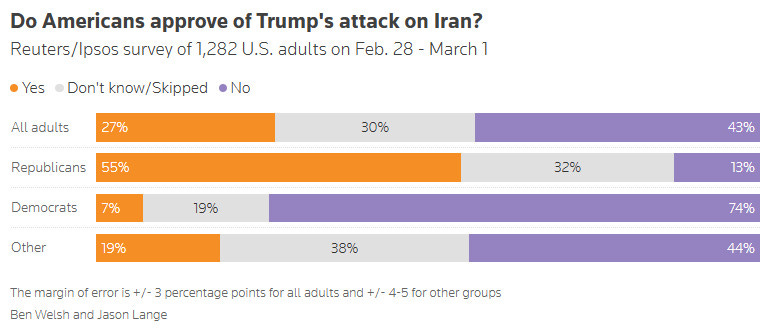
Americans Across the Political Spectrum Oppose War on Iran
Briefly, I want to point out the American unity in opposition to this illegal war. Whether it’s because Americans recognize it’s illegal, or because they recognize 60% of Americans already can't make ends meet and are tired of never ending wars, or because they remember Trump promised "no new wars" and demand accountability—or all of the above—only 25% of Americans support Trump's illegal war on Iran. Red and Blue, Americans are united against this war.
Below, I have written out each question, followed by the answer provided by each of the Iranian-American thought leaders I interviewed. I encourage you to follow them and support their advocacy. As corporate media continues to fail in its responsibility to serve as the fourth estate, it is critical we elevate the voices of these thought leaders doing the hard work on the ground for the sake of human rights and justice.
1. Ariana Jasmine
Ariana Jasmine is an Iranian-American political commentator and activist. Subscribe to her on Substack by clicking on her name.
Qasim: What are some of the biggest misconceptions regarding the Iranian people that it is critical we recognize right now?
Ariana: One of the most damaging misconceptions right now is the belief that the Iranian diaspora speaks with one unified voice in support of U.S. military intervention. That is simply not true. There is a loud and highly visible minority of Iranians—particularly within segments of the diaspora—who dominate traditional and mass media platforms and who are urging Americans to support military escalation. They frame intervention as justified because the Iranian people are suffering and suggest that Americans should set aside their concerns about Trump or U.S. foreign policy in order to support action against Iran.
But this faction does not represent all Iranians. Iranians are not a monolith, and many within both Iran and the diaspora strongly oppose foreign military intervention. There are countless Iranians—particularly leftists, anti-war activists, and pro-democracy advocates—who believe that liberation must come from within, not through bombs dropped by foreign governments. Yet many of them are afraid to say so publicly.
I have personally heard from numerous Iranian Americans who tell me privately that they oppose U.S. intervention but feel too intimidated to speak out. They fear backlash from the dominant diaspora voices who control much of the media narrative. That loud minority wields disproportionate influence and access, and as a result, they often overshadow the diverse and nuanced views that actually exist within the Iranian community. It is critical that Americans understand that support for war is not synonymous with support for the Iranian people.
Qasim: Building on that, what are some of the biggest misconceptions people should recognize regarding the country of Iran in general?
Ariana: Another major misconception concerns how Iranians inside Iran are responding to the recent events. There are widely circulated videos—often amplified by state-sanctioned Iranian media—portraying the country as unified in mourning and presenting the Supreme Leader as a martyr. That framing is deeply misleading.
First, the Supreme Leader was not a religious symbol of unity; he was the head of a totalitarian government. While he held the title of “Supreme Leader,” that title reflects political authority within an authoritarian system, not universal religious leadership. Of course, there are Iranians who support the government—every country has citizens who support those in power, regardless of how controversial or unpopular they may be. But it is inaccurate to suggest that the majority of Iranians are grieving in lockstep or fully aligned with the regime.
In reality, many Iranians are deeply frustrated with the government. They are exhausted by economic hardship, political repression, and corruption. Many want meaningful systemic change. However, the true sentiments of the Iranian people are extraordinarily difficult to access. People inside Iran are often afraid to speak freely. Even members of my own family are hesitant to share updates out of fear that their communications could expose them to government retaliation.
State-sanctioned media within Iran is not going to broadcast dissent. It is currently invested in projecting strength, unity, and defiance toward the United States. That propaganda is then picked up and reshared—sometimes even by well-meaning American leftists—who may not realize they are amplifying the messaging of an authoritarian regime. When anyone, regardless of political affiliation, uncritically spreads state propaganda, they risk reinforcing the same disinformation dynamics they criticize elsewhere.
The reality is that the authentic voices of the Iranian people—especially those critical of both their own government and foreign military intervention—are constrained by fear, censorship, and surveillance. Any serious discussion about Iran must acknowledge that complexity.
Ariana Jasmine is an Iranian-American political commentator and activist. Subscribe to her on Substack by clicking on her name.
2. Etan Mabourakh
Etan Mabourakh is Jewish Iranian American, National Iranian American Council Organizing Manager, and a Brooklyn for Peace Board Member. Reach him at emabourakh@niacouncil.org, on Twitter, and subscribe on Substack.
Qasim: One of the most debated questions is—what is the right policy going forward? What should the American people be demanding of our elected officials to ensure compliance with US and international law, meaningful care for the people of Iran, and sustainability for long term peace?
Etan: The American people should demand a policy that puts human life and the rule of law above the president’s thirst for war. Iran’s future must be decided by Iranians themselves, not by American bombs or sanctions that starve families, empty hospital shelves, and crush the very civil society we claim to support. The same principle applies here at home: America’s future must be decided by the American people, and Congress must finally act as our constitutional check on a rogue president who has no authority to unilaterally drag us into another catastrophic, illegal war.
When a president orders strikes that kill civilians and hit essential infrastructure, he is not ‘protecting’ anyone—he is committing war crimes on the bloody backpacks of Iranian schoolgirls and in the arms of terrified parents rushing newborns out of darkened hospitals. Americans should be crystal clear in our demands: no war with Iran, an end to collective punishment through broad sanctions, a return to real diplomacy and humanitarian relief, and strict compliance with U.S. and international law so that both Iranians and Americans can fight for their own futures without bombs falling from the sky in their name.
Etan Mabourakh is Jewish Iranian American, National Iranian American Council Organizing Manager, and a Brooklyn for Peace Board Member. Reach him at emabourakh@niacouncil.org, on Twitter, and subscribe on Substack.
3. Danesh
Danesh is an Iranian-American activist who has built a platform of millions to combat disinformation and hate. Follow him @ThatDaneshGuy across platforms.

Qasim: You’ve been clear that while you unhesitatingly oppose the Iranian regime, you also oppose foreign interventionism and bombing of Iran. What guidance do you have for non-Iranians on what the actual path towards justice is, one in which the Iranian people can thrive with true self-determination, and how they can support policy and steps to reach that goal?
Danesh: I appreciate this question because it is one of the most difficult questions to answer honestly. Iranian liberation will not come easily, and it certainly will not come through indiscriminate bombing or military intervention that inflicts collateral damage on innocent people and on our beautiful country itself. Removing individual figureheads—whether an Ayatollah or any other senior official—does not automatically translate into freedom. The regime is not a single person; it is deeply embedded within Iran’s political, military, and economic structures. Dismantling it would not be a matter of decapitation but would require a full-scale ground war, and that would carry catastrophic human consequences.
There are also realities that many outsiders fail to appreciate. There are individuals who will fight willingly on behalf of the regime, whether out of ideological alignment or loyalty. There are others who are economically desperate due to years of sanctions and systemic hardship. For many, the regime—however oppressive—remains their primary source of income, food, and basic stability. Desperation does not breed rebellion; it often breeds survival instincts. People who are economically dependent on state structures may feel compelled to defend them, even if they resent them.
None of this reflects sympathy for the regime. I do not support it. But I worry about the tendency—especially outside Iran—to reduce the regime to a small group of villains whose elimination will somehow clear the path to democracy. That is not how entrenched authoritarian systems function. Liberation is not automatic, and it is not triggered by a single event.
Many Iranians who are expressing relief or even celebration at the death of Khameini are reacting to what they view as long-overdue karma for years of brutality. That reaction is understandable. But any Iranian who claims that this moment constitutes liberation, or even that we are now securely on the path toward it, is being short-sighted. At the same time, we must be cautious about the powers being normalized globally. Granting Western governments the unchecked ability to bomb sovereign nations at will—even if it appears to benefit us in the short term—sets a precedent that ultimately harms both the United States and the broader international order.
We should not celebrate the normalization of illegal intervention simply because, for a moment, it feels strategically convenient. True self-determination for the Iranian people will not emerge from foreign bombs. It must come from sustained internal push, accountability, and the will of the people themselves—without empowering global powers to disregard international law whenever it suits their interests.
Danesh is an Iranian-American activist who has built a platform of millions to combat disinformation and hate. Follow him @ThatDaneshGuy across platforms.
4. Ari Honarvar
Ari Honarvar is an award-winning Iranian American journalist, artist, and speaker working at the intersection of collective resilience, culture, and social transformation. Find her on Threads, on Substack, and at @rumiwithaview across platforms.
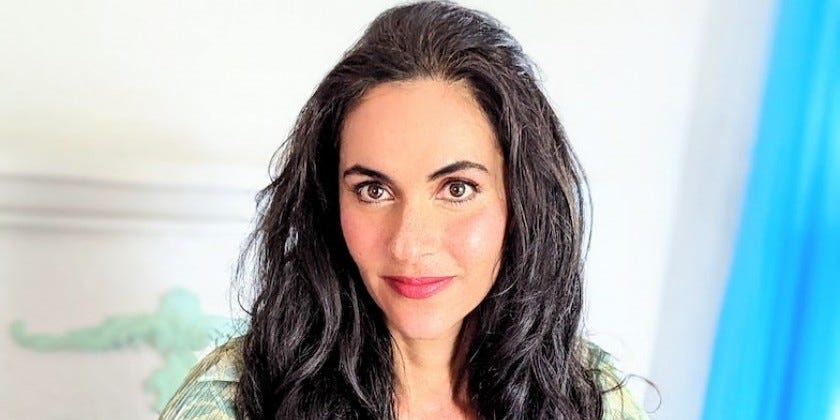
Qasim: As an Iranian-American activist, artist, and leading voice, you’ve written and spoken extensively on Iran and its place in the world. With this new war launched on Iran, we’re seeing an onslaught of misinformation and disinformation, and it becomes hard to know what is accurate. How do you verify the information you report, and what sources can you recommend the public best rely on to ensure the information they have is the most accurate information possible?
Ari: This is an important question, and an increasingly urgent one. As a journalist who has worked with editors and fact-checking departments at major outlets, I know firsthand how rigorous—and painstaking—the process of producing reliable journalism can be. In moments like this, when multiple governments and political actors are actively pushing their own narratives, the information space becomes chaotic very quickly. It becomes difficult to distinguish verified facts from compelling claims that are strategically framed.
To minimize error, I do not rely on any single outlet or ideological lane. I examine reporting across the spectrum and look carefully for bias, omissions, and inconsistencies. I am not infallible, and I approach information with that humility. My method involves triangulating between first-person accounts from inside Iran, reports from established human-rights organizations, cross-ideological political analysis, and investigative journalism. No source is beyond scrutiny, which is precisely why cross-referencing is essential. When multiple independent lines of verification converge, confidence in the underlying facts increases.
Take, for example, the February 28 strike on the Shajarey Tayyebeh all-girls elementary school in Minab. Early reporting from major outlets suggested it was an Israeli missile strike. However, neither the United States nor Israel confirmed an attack on the school itself. Pro-intervention accounts attempted to frame the incident as an IRGC rocket misfire. BBC disinformation reporter Shayan Sardarizadeh debunked key false claims circulating on Telegram about the alleged misfire, while the New York Times verified video footage of a strike hitting a nearby IRGC base. CNN geolocated additional footage showing the strike occurring near the school, which sits roughly 200 feet from that base. The emerging evidence suggests the military installation was likely the intended target, though the school was either directly struck or damaged in the same operation. The U.S. government has stated it is “aware of reports concerning civilian harm” and is investigating—a familiar formulation that warrants scrutiny.
It is also important to interrogate casualty figures and language. Local officials reported that 165 people were killed and 95 injured. That number raises questions because the total student enrollment present that morning was reported to be 170. What we can say with certainty is that during a joint U.S.–Israeli strike campaign, a school was destroyed and dozens of children were likely killed. The precise accounting may evolve, but the civilian toll is undeniable.
Finally, we must pay close attention to how war is described. Language shapes perception. The New York Times referred to the victims as “people” rather than explicitly identifying that children were among those killed: “One strike hit a girl’s elementary school near a naval base in southern Iran and killed more than 60 people.” That choice of wording matters. Sanitized language has historically softened public reaction to civilian harm. When reporting on potential war crimes or civilian casualties, clarity and specificity are not editorial preferences—they are ethical obligations.
In times of war, skepticism is not cynicism. It is responsibility. The public should consult multiple reputable outlets, follow journalists who demonstrate transparent sourcing, read human-rights documentation, and remain alert to both government propaganda and emotionally manipulative narratives. Accuracy requires patience. And in moments like this, patience is one of the few safeguards we have against misinformation becoming policy.
Ari Honarvar is an award-winning Iranian American journalist, artist, and speaker working at the intersection of collective resilience, culture, and social transformation. Find her on Threads, on Substack, and at @rumiwithaview across platforms.
5. Micah Erfan
Micah Erfan is a law student at UVA and a political content creator whose work exceeds 1B annual views. Subscribe to him on Substack by clicking on his name.
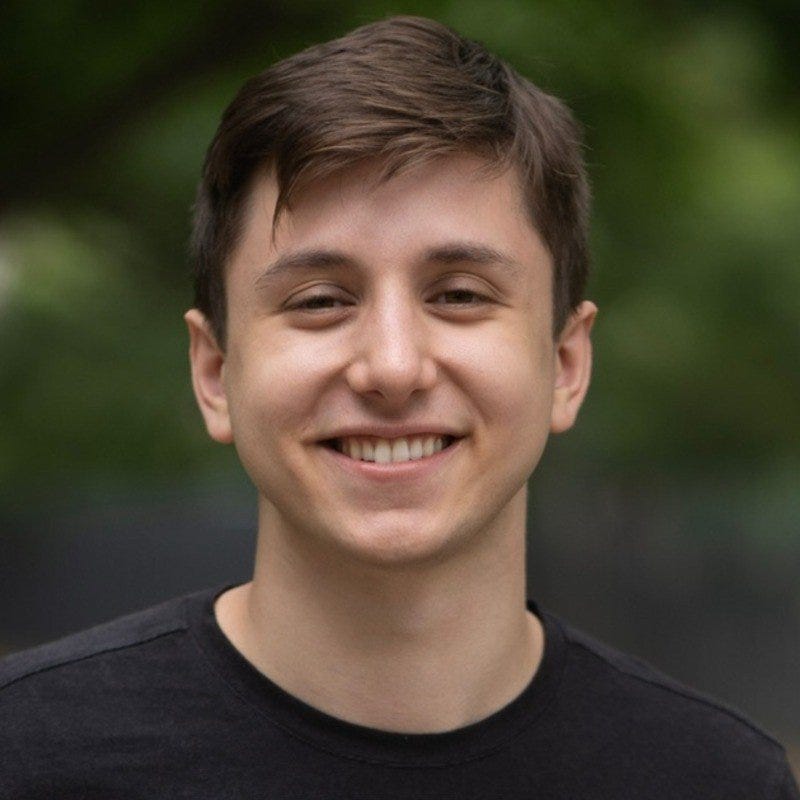
Qasim: You’ve shared with me that the Iranian regime imprisoned your grandfather. What is your reaction as you see the United States and Israel bomb Iran, and what message do you have for those unsure how to decipher this situation?
Micah: The Iranian regime imprisoned my grandfather. I shed no tears for Khameini. In fact, I join with millions of Iranians including spitting on his grave. But I will not forget the lessons of the Iraq war. Everything that made the regime change war in Iraq disastrous applies here as well. Iran is 4x the size and has 2x the population. There is no regime change without boots on the ground invasion and occupation. The government will fall quickly, just as Saddam Hussein’s government did. Many will die in the process. The following will be chaos.
Reza Pahlavi will face domestic resistance if installed. Terrorist islet cells will strike American troops and new government troops. Prolonged occupation will be required to restore order. In Iraq 300,000 people died. In Iran, even more could die. Infrastructure and the economy will suffer damage in the process. The theocratic regime continues to murder peaceful protesters. Iran’s media blackout makes it difficult to arrive at an exact number, but credible estimates over the years places it into the tens of thousands murdered. The mullahs deserve an eternal stay in the most fiery pit of hell. But don’t be fooled by any promises of a short and easy regime change war. There is no such thing.
Micah Erfan is a law student at UVA and a political content creator whose work exceeds 1B annual views. Subscribe to him on Substack by clicking on his name.
Conclusion
If there is one unifying thread uniting these voices, it is this: war is not liberation, propaganda is not truth, and bombs are not policy. The Iranian regime can be oppressive and violent. U.S. intervention can be illegal and catastrophic. Both can be true at the same time. That nuance is precisely what corporate media too often flattens in its rush for spectacle, ratings, and partisan framing.
At a moment when civilian lives are being lost, when misinformation is flooding every platform, and when the Constitution is being treated as optional, we have an obligation to demand better. Congress must reassert its constitutional authority. Elected officials must answer clearly whether they support unilateral war. And journalists must do more than echo official statements; they must interrogate them.
We must also reject the lazy binaries that dominate cable news and social media. Opposing the Iranian regime does not require endorsing foreign bombing. Opposing U.S. militarism does not require amplifying state propaganda from Tehran. Accountability must be consistent, principled, and grounded in law.
Most importantly, we must elevate the voices doing the hard work—those documenting abuses, verifying facts, risking backlash, and speaking with moral clarity rather than ideological convenience. Ariana, Etan, Danesh, Ari, and Micah represent the kind of leadership that corporate platforms routinely sideline in favor of louder, simpler narratives. It is our responsibility to amplify them. It is one reason I am privileged to elevate their voices today, and I encourage each of you to follow and support their work to help elevate factual accuracy, human rights, and justice.
Subscribe. Share this piece widely. And stay relentless in demanding adherence to US and international law. History will remember how we responded to this moment. Let’s make sure it remembers that we chose truth over propaganda, law over lawlessness, and humanity over war.
Thank you for clear and useful information and perspectives from people who actually have lived and studied and reported on Iran and its people and can describe the situation without a distorted American lens. I am vehemently anti-military intervention in pretty much all circumstances; as a mother and a teacher, I just can’t get past the horror of killing little girls in their school. Those lives were precious and valuable and important and should never have been taken by our cruel and horrible leaders.
It will be a miracle if any average Iranian citizens doesn't hate the USA. While most post comment on US casualties, I post about little girls bombed in their school. US soldiers aren't drafted, yet. But an incompetent has put them in harms way in Iran AGAIN. And 🍊 IT has ticketed parties and shows off his new statues. Insidious.