


Gaby Goldstein is the founder of State Futures and author of State Power, a newsletter tracking how states are pushing back against authoritarian overreach. In today’s guest post, she takes us inside a Chicago press conference where nine lawmakers from six states stood together to say states aren’t moving on from ICE’s escalating tactics—and lays out how a coalition of 112 legislators across 35 states has turned that resolve into more than 50 enacted laws this year alone. It’s the same fight we’re in here at Let’s Address This: naming what’s happening, and refusing to face it alone.
Read Gaby’s piece below, and go follow and support State Power.

State Legislators Are Linking Arms to Fight ICE—and It’s Working
The federal government is betting that a constant churn of new controversies will exhaust the public and keep states from responding. That bet is losing.
A Guest Post From: Gaby Goldstein
Yesterday in Chicago, I joined nine state lawmakers from six states at a press conference to send a clear message: states are not moving on, and not backing down. The conduct of the federal government is an outrageous affront to the rule of law, and states have both the authority and the will to assert their own rights as states and protect communities.
The press conference, which my organization State Futures co-hosted with Illinois State Senator Graciela Guzmán (one of nine co-chairs of our State Futures Federal Response Coalition) brought together legislators from Illinois, Colorado, Maryland, Oregon, Wisconsin, and California who have been fighting hard and winning to protect civil rights, uphold due process, and defend communities in the face of escalating federal tactics and this administration’s constant degradation of constitutional norms and the rule of law.
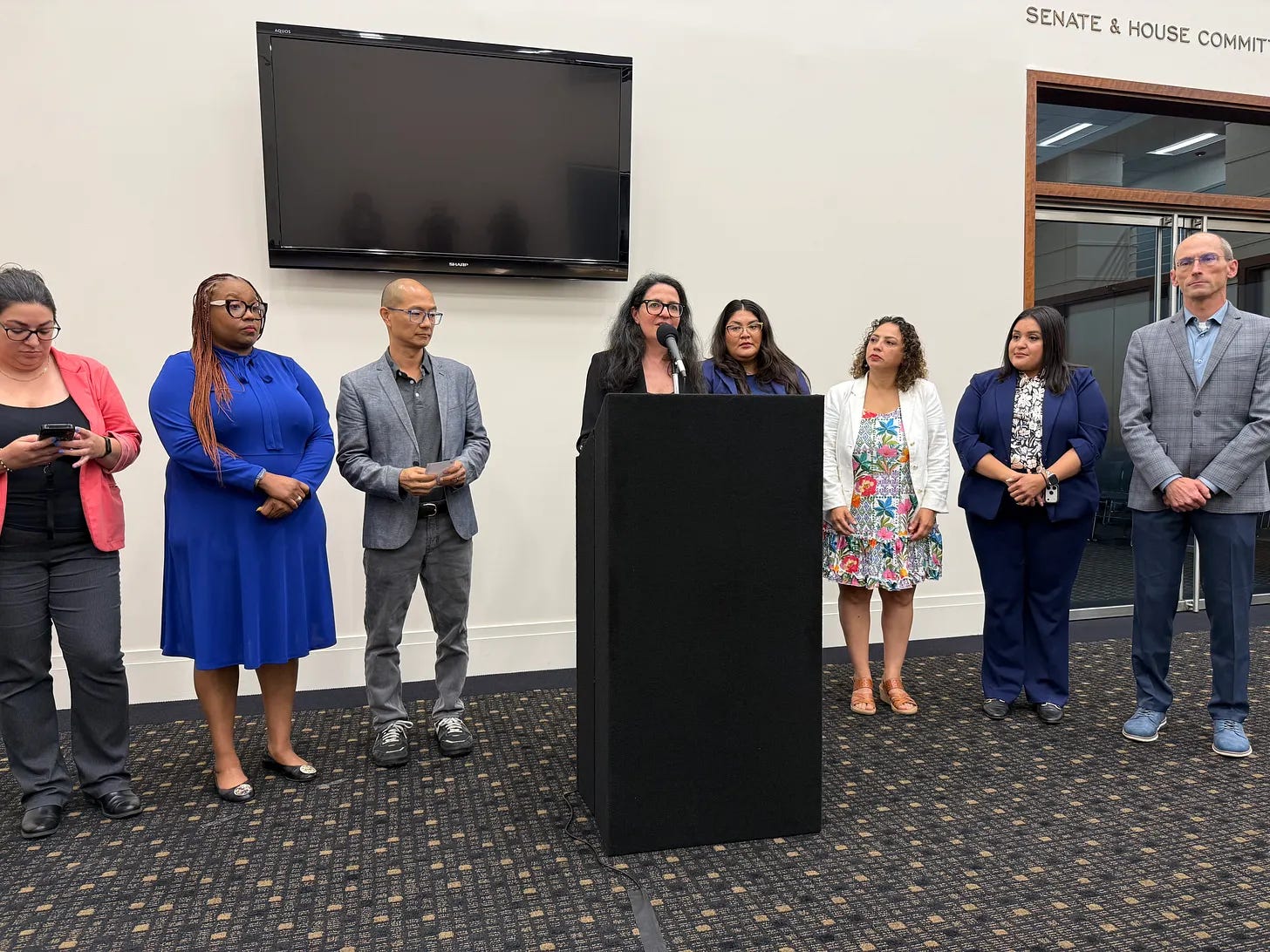
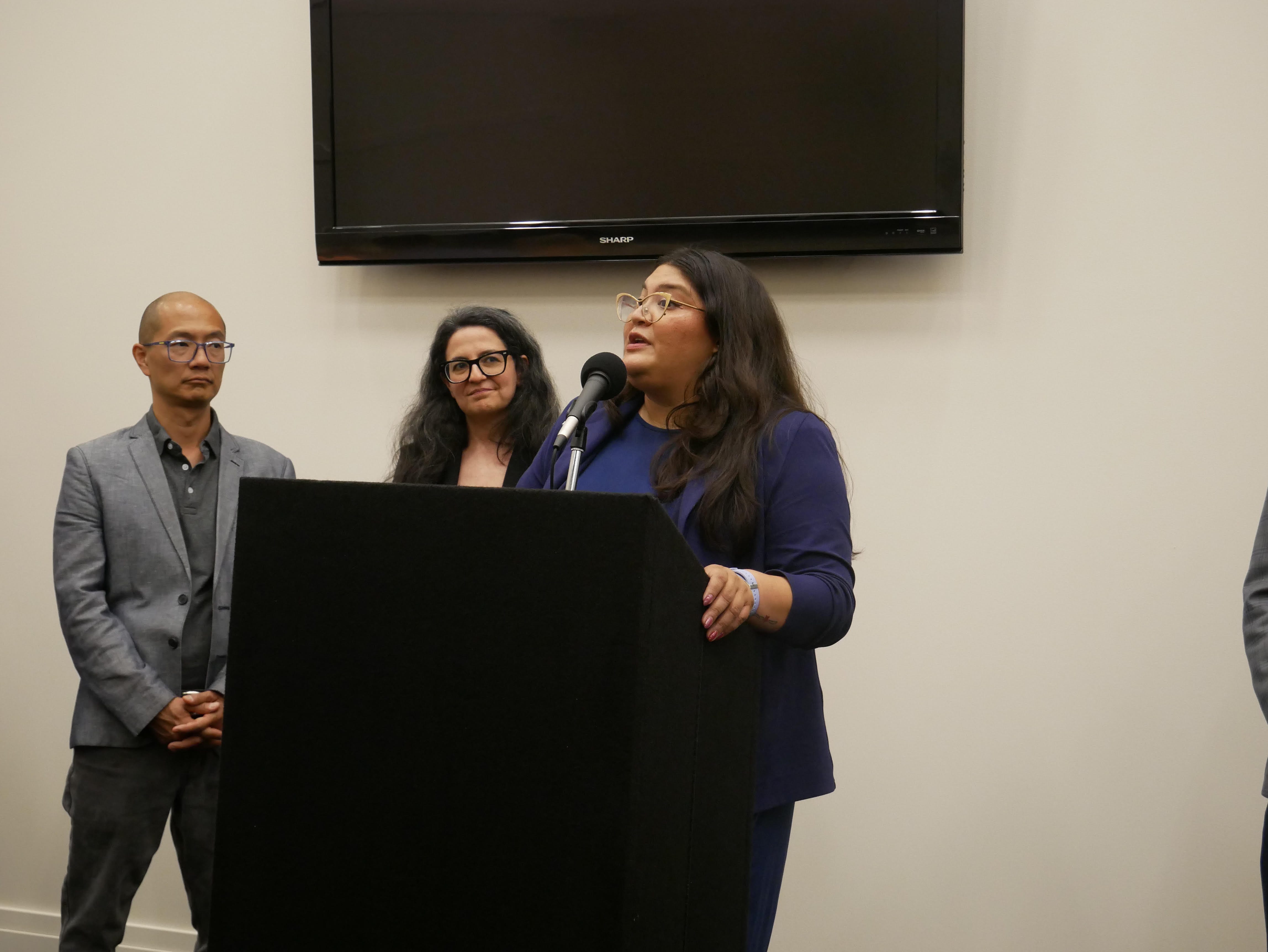
Joining Sen. Guzmán were Illinois Representatives Lilian Jimenez and Norma Hernandez, Colorado Senator Mike Weissman, Maryland Delegates David Moon and Nicole Williams, Oregon Representative Farrah Chaichi, Wisconsin Representative Ryan Clancy, and California Assemblymember Sade Elhawary. Sen. Weissman and Del. Moon also serve as co-chairs of the State Futures Federal Response Coalition.
The timing was fitting. Hours before we took the podium, WIRED reported that new draft ICE detention contracts include language declaring that state and local laws “shall not apply” to detention facilities – a contract clause attempting to erase state authority with the stroke of a pen. A federal judge in Washington state recently rejected nearly identical language. But the fact that the federal government is still trying tells you everything about the moment we are in.
And it underscores why the work these state legislators are doing matters so much.
What’s Happening In The States
During the 2026 legislative session, State Futures is tracking 284 bills introduced across 34 states. Our tracker is the largest publicly available resource on state-level immigration and rule-of-law legislation. In the past few months, we’ve published three in-depth playbooks for state legislators, which are menus of policy options states can draw from as they draft and pursue solutions.
Over 50 bills have passed in 15 states so far this year: bans on 287(g) agreements between local police and ICE, “No Secret Police” bills requiring law enforcement to identify themselves, protections for sensitive locations like schools, churches, and hospitals, new private rights of action for residents whose civil rights are violated by federal agents, regulations on detention facilities, data privacy protections restricting the sharing of personal information with federal authorities, and more.
That is real, concrete, enacted law. And it represents tremendous momentum. This may not be the narrative you see in the press, which is consumed by the crushing horror and chaos at the federal level. But the reality is that states are fighting back, hard, and - increasingly - together.
Indeed, what makes this moment different isn’t just the volume of legislation across statehouses. It’s the coordination behind it. Our Federal Response Coalition includes 112 lawmakers from 35 states and has been meeting regularly since late 2025. During the legislative session this year, they met weekly. They’re sharing bill language, comparing strategies in real time, learning from each other’s wins and losses, and building a body of law together that is far more coherent and powerful than anything any single state could produce alone.
As Sen. Guzmán put it yesterday: “One of the greatest gifts that State Futures, and in general our camaraderie-ship, have to offer is that no one state is fighting ICE and the federal government alone. Every single one of us has watched this administration test the limits of state authority. Every one of us has seen our communities become the testing ground for new forms of surveillance, intimidation, and detention. Every single one of us has had to ask themselves the same question: how do states respond?”
We are proving the answer. State legislators are coming together in a unified front — sharing tactics, resources, ideas, and lessons learned. Linking arms and getting it done.
The Bigger Picture
I want to say something I’ve been thinking and writing about for a long time, and I want to say it clearly.
We cannot keep treating state-level policy as a tactic we reach for when we’re out of power in Washington. That short-term, unsustained investment in state-level policy, leaders, and infrastructure has been a critical — nearly fatal — mistake. For decades, one side of the political spectrum invested heavily in state-level infrastructure while the other treated states as an afterthought and a back-up plan. The results speak for themselves.
As Heather Gerken – former Yale Law School Dean and current President of the Ford Foundation – has observed, federalism has no partisan valence. It is just a tool, one that has been used far more effectively by one side than the other. She has also made the point that the familiar story of the states as 50 laboratories of democracy is a “campfire tale.” In reality, there are two laboratories: one red, one blue. And as political scientist Alexander Hertel-Fernandez has established, the red one has been winning.
That ends now.
State Futures recently celebrated our first birthday. In that time, we’ve grown to support a network of nearly 900 state policymakers who share our values — legislators and State Financial Officers across 49 states. It’s the counterweight to ALEC and the State Policy Network that has been needed for decades. Our side may be tardy to the party, but we’re growing fast and getting work done.
The federal government is betting that a constant churn of new controversies will exhaust the public and keep states from responding. Yesterday’s press conference, and our work over the last year, is proof that the bet is losing. State lawmakers are more coordinated, more resolved, and more effective than ever.
This is what collective state action looks like. And we’re just getting started.
Gaby writes State Power, tracking how states are fighting back against authoritarianism — and building real power together. She's also the founder of State Futures. Subscribe to support her work.

As an alternative to a paid subscription, by popular demand, you can now make a one-time contribution to support Let’s Address This.
This is great news. I just subscribed. Keep up the good work 👏
It’s great to hear some states continue to push back on federal overreach. Keep up the good work and thank you!