

Graham Platner Won Maine by 50 Points. The Establishment Is Furious. Good.
The double standards, the legacy media pile-on, and why a landslide primary victory tells you everything about who the billionaire class is actually afraid of

Here’s what happened in Maine.
A first-time Senate candidate ran on an unapologetic platform of universal healthcare, labor rights, Indigenous sovereignty, economic justice, condemnation of genocide in Gaza, condemnation of the illegal war in Iran, and a complete refusal to take a single dollar from AIPAC or corporate PACs.
The establishment said he was unelectable. Corporate media said he was irredeemable. Democratic insiders clutched their pearls. Republican Senator Susan Collins expressed the gravest of concerns. David Brooks of the New York Times called him a “degenerate.”
And Graham Platner won the Democratic primary by more than 50 points.
He is already polling nearly 10 points ahead of Susan Collins in the general election.
Turns out progressive, worker-focused policies work. Turns out Mainers—like most Americans—are capable of distinguishing between a candidate who made mistakes, owned them, apologized, and did better, and the sea of politicians who have done far worse and never apologized for anything.
What this story is really about, though, is not just Maine. It is about the grotesque double standard being applied to Graham Platner—and what that double standard reveals about who corporate media protects and who it targets. Let’s Address This.
PART ONE: The Double Standard That Exposes Everything
Let us do a simple comparison. Three men. Three Senate races. Three very different standards of media scrutiny.
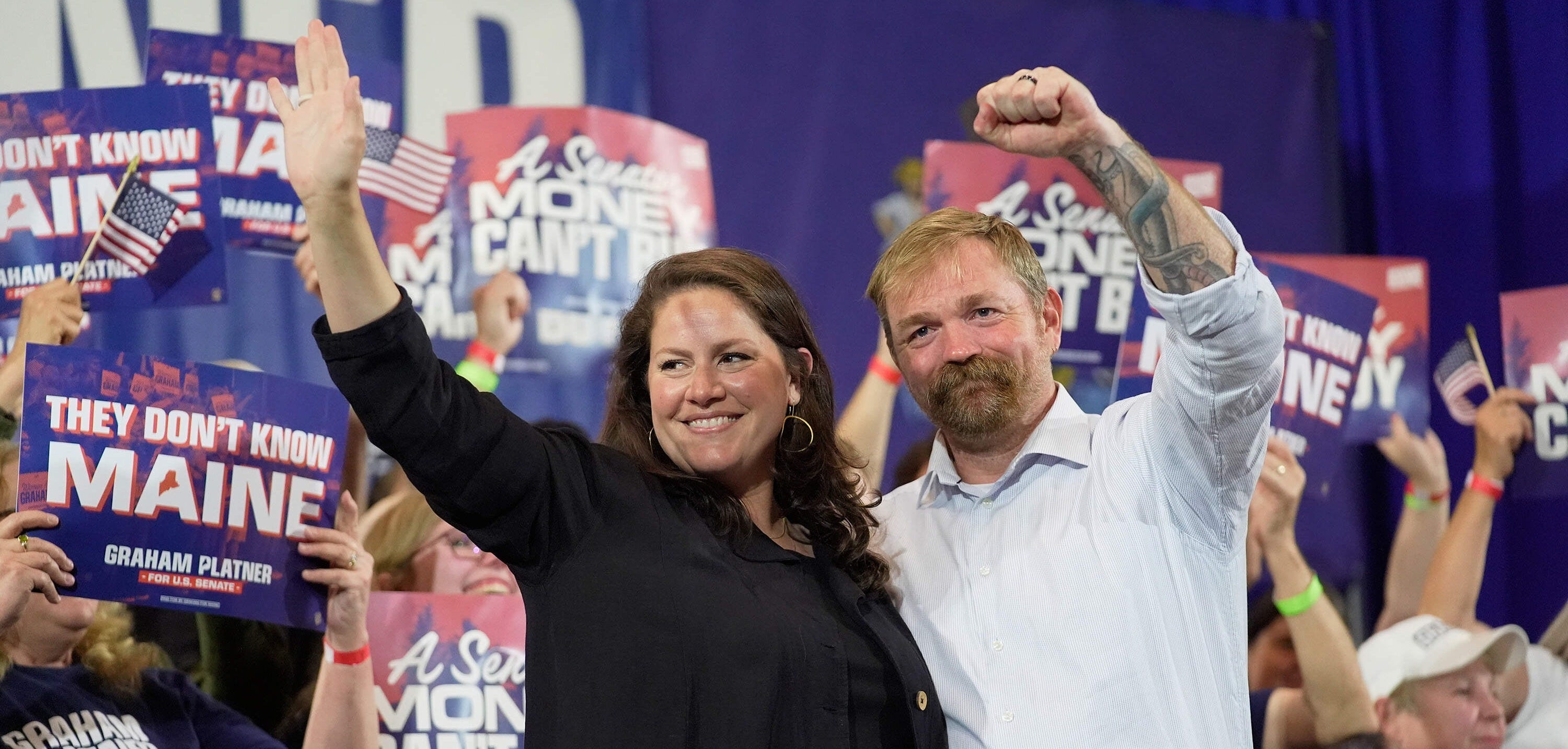
Graham Platner—Democratic nominee for Senate in Maine—made inappropriate comments in the past. He has owned those comments completely and without equivocation. He has apologized. He has promised to do better. And the Black and Indigenous people of Maine, the communities most directly affected by questions of his character and commitment, have spoken—alongside his wife Amy—and attested that he has done better. He has demonstrated growth. He is running on a platform that threatens every entrenched interest in American politics.
Alexander Vindman—running for Senate in Florida—has publicly declared on a podcast that there is “inherent trained racism against Jewish people in Muslim communities” that is “encouraged” and “nurtured.” This is not a past mistake he has apologized for. He said it recently. He has not retracted it. He has not apologized. He continues to deny that Israel’s genocide on Palestinians is a genocide—in direct contradiction of the UN, the ICC, the ICJ, Amnesty International, Human Rights Watch, B’Tselem, and Israeli genocide scholars. He is a genocide denier and an anti-Muslim bigot, and he is completely unrepentant about both.

Ken Paxton—running for Senate in Texas—is among the most comprehensively corrupt politicians in America. His record of documented misconduct, abuse of power, and ethical violations would require an entire separate article to catalogue fully. He has not apologized for any of it. He remains entirely unrepentant and is running as a proud standard-bearer of the MAGA movement.

Now: which of these three candidates has corporate media designated as irredeemable and demanded drop out of his race?
Graham Platner.
Not the genocide denier. Not the anti-Muslim bigot. Not the most corrupt attorney general in modern American history. The candidate who apologized, grew, and is fighting for universal healthcare and Indigenous sovereignty.
I want you to sit with that for a moment—because it is not an accident and it is not a coincidence.
Vindman and Paxton, for all their differences in party affiliation, share one essential quality: they are status quo politicians. Neither one is a structural threat to the billionaire class, the military industrial complex, the health insurance industry, or the political establishment. Vindman rejects universal healthcare. Paxton serves the donor class that has always owned Texas politics. Both are in denial of, and support, Israel’s genocide on Gaza. Neither one is a change agent.
Graham Platner is. And that makes him the one candidate in this comparison who actually threatens the people who own corporate media.
The attacks on him are not merely about his past mistakes. They are about his future potential to disrupt the system that funds the outlets attacking him. The billionaire class does not spend money attacking politicians who are not a threat. Platner’s landslide primary victory is proof that they are right to be afraid.
But this double standard is just one part of the all-out assault you will see on Graham Platner in these coming months through the November general election.
PART TWO: Susan Collins and the Spectacular Hypocrisy
Susan Collins issued a public statement declaring that the allegations against Graham Platner are “extremely troubling and serious” and that he “owes the people of Maine a detailed answer.”
He has answered. Repeatedly. Fully. Without equivocation.
But since Senator Collins wants to establish a standard of public accountability for personal conduct—a standard I am delighted to apply consistently—let us apply it.
Would Susan Collins like to answer why she has repeatedly supported and defended Donald Trump—a man who has been found civilly liable for rape, who has been credibly accused of sexual misconduct by dozens of women, who bragged on tape about sexually assaulting women, and who appears in the Epstein Files at least 1 million times that we know of?

Would Susan Collins like to answer why she voted to confirm Brett Kavanaugh to the Supreme Court despite the credible, detailed, and corroborated sexual assault allegations against him—and despite the fact that her stated justification for the vote, that Kavanaugh would protect Roe v. Wade, was exposed as either naïve or dishonest within months of his confirmation?
Would Susan Collins like to answer why even now she won’t admit she regrets confirming Kavanaugh, despite seeing the horrific aftermath of his rulings to overturn Roe and devastating tens of millions of women?
Every MAGA accusation is a confession. The same Republicans who spent years defending Trump’s documented sexual misconduct, who voted to confirm a credibly accused Supreme Court Justice, and who have stood silently as their party has systematically dismantled women’s rights at every level of government—are now clutching pearls at a Democratic candidate who is running to oppose each of those injustices.
And it is not just Republicans. Corporate Democrats—the same people who rallied behind Andrew Cuomo despite his documented, multiple, substantiated cases of sexual abuse—are now clutching pearls about Platner. These are not people applying a consistent moral standard. These are people applying a political one. Cuomo was useful to the establishment. Platner threatens it. That is the only variable that changed.
PART THREE: The Legacy Media Pile-On—And Why It Failed
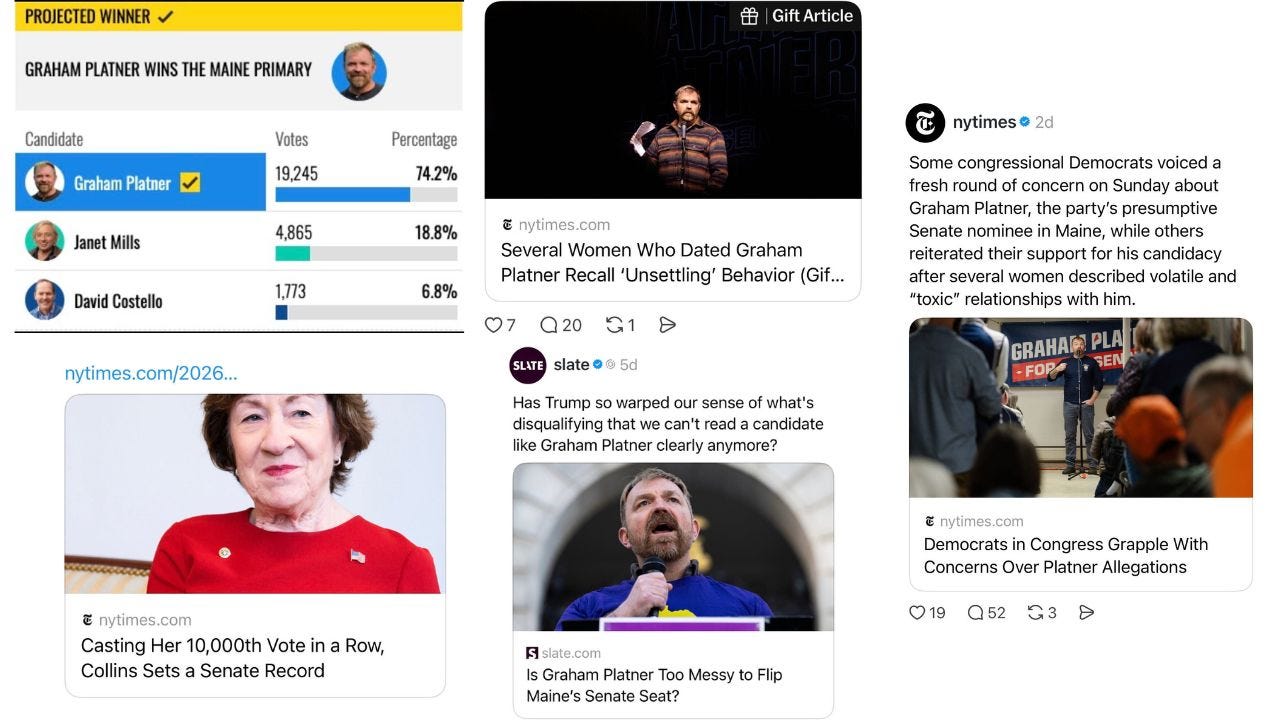
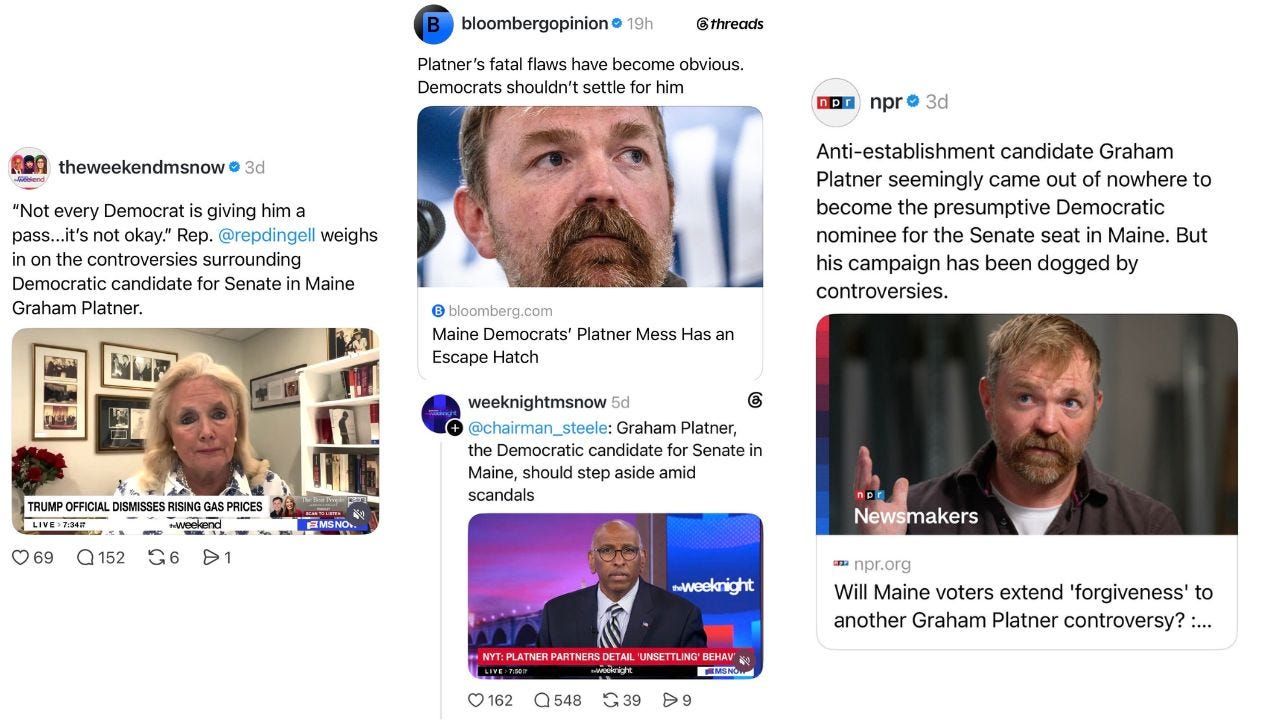
The corporate media’s treatment of Graham Platner has been a case study in exactly the kind of journalism that has driven American trust in media to its historic low 28%.
David Brooks of the New York Times called Platner a “degenerate.” This is the same David Brooks who wrote an entire column advocating for moving on from the Epstein files—without disclosing that he himself appears in those files. The man lecturing the public about degeneracy while hoping people forget that he left his wife for his own assistant 23 years his younger. He is a cautionary tale about the access journalism that passes for opinion in legacy media.
David Frum of The Atlantic condemned Platner as unforgivable. This is the same David Frum who served as a Bush administration propagandist and helped manufacture the lies that justified the Iraq War—a war that killed hundreds of thousands of civilians, destabilized an entire region, and produced generational trauma whose consequences we are still living with today. A man who helped sell illegal war crimes to the American public should be in a Hague courtroom, not an Atlantic editorial chair—and he has absolutely no standing to tell anyone what is and is not forgivable.
And then there is what the legacy media did not cover. None of these outlets mentioned that independent journalists in Maine like Shay Stewart-Bouley—better known as Black Girl in Maine, who has followed Platner’s work closely and with the kind of ground-level scrutiny that actually matters. She has documented his genuine commitment to uplifting women and Black and brown communities. Yet, national outlets ignore her voice despite her on the ground knowledge and experience.
[Side note, you should absolutely subscribe to Shay Stewart-Bouley’s journalism.]
None of the national legacy outlets asked the Black and Indigenous people of Maine what they think of the man running to represent them? None of them covered his platform in any substantive depth—the universal healthcare, the labor rights, the Indigenous sovereignty, the rejection of AIPAC money, the condemnation of genocide.
Because none of that fits the story they were trying to tell.
And here is the verdict on that story, delivered by the people of Maine: Platner won by more than 50 points.
That is not a narrow squeaker that could be attributed to name recognition or ballot positioning. That is a landslide repudiation of the media narrative. Mainers watched the pile-on, read the headlines, saw the establishment consensus—and voted for Platner anyway. Because they know him. Because they have watched him show up. Because they trust what the Black and Indigenous communities in their state are saying about him far more than they trust David Brooks.
The people of Maine proved something important on primary night: you cannot manufacture consensus for the establishment’s preferred outcome when voters have access to other sources of information. The legacy media’s monopoly on the political narrative is broken. And the 28% trust number is not a crisis for journalism—it is a verdict on what journalism has become.
Why We Elevated Platner—And Why We Will Hold Him Accountable
Let’s Address This covered Graham Platner early—before the landslide, before the polling showing him up on Collins, before the national attention. Below is my Summer 2025 interview with him. We covered him because of what he ran on: universal healthcare, economic justice, Indigenous sovereignty, rejection of corporate and AIPAC money, and the courage to name genocide as genocide when every other politician was running from the word.
Those are the values we believe in. Those are the values that working families in Maine and across this country are demanding. And those values, it turns out, win elections—by 50 points.
But I want to be clear about something. Our support for Graham Platner is not unconditional cheerleading. It is principled alignment—which means it comes with principled accountability.
We will hold him to the standard of justice he has campaigned on. We will call him out if he takes corporate money. We will name it if he goes silent on genocide. We will write about it if he fails the Indigenous communities whose sovereignty he has promised to champion. We will not trade in access journalism for any candidate—not even the ones we want to win.
I asked him directly about the alleged Nazi tattoo, and will state for the record that I believe him that he is anti-fascist and anti-Nazi. That beyond his word, we have independent verification because he went through multiple physical examinations by the military, who check for and deny applicants with hate symbols—and accepted him. And yet additional verification because he went through checks with the State Department who check for hate symbols before giving him high security clearance—and he received that clearance. I would not support a candidate to the US Senate who I believed was anything but anti-fascist. That is my binding promise to the millions of monthly readers to Let’s Address This.
That is the promise of independent media. That is what your subscription to Let’s Address This funds. Not a platform for any particular candidate or party—but a platform for the values of human rights, economic justice, and the accountability that corporate media is constitutionally incapable of providing.
Closing Thoughts
None of the attacks on Platner in the primary were about universal healthcare. None of them were about protecting labor rights. None of them acknowledged what Indigenous Mainers and Black Mainers have said about this man. None of them engaged with what it would mean—for Maine, for the Senate, for the country—to have a senator who refuses AIPAC money and calls genocide by its name.
And the general election attacks on him will be the aforementioned on steroids. Don’t fall for it.
The establishment is not afraid of his past mistakes. They are afraid of his future votes. And they should be. Because if and when Graham Platner wins in November—and the polling suggests he can—the Senate will have a member who answers to the people of Maine, not the billionaires who own the outlets that tried to destroy him.
Platner will win in November if he stays true to the values of fighting for working Mainers, as that is what won him this primary. That is something no outside force—no corporate media pile-on, no establishment Democrat clutching pearls, no Susan Collins press release—has any control over.
And that is exactly why they are so afraid.
If you believe in the kind of independent, people-funded journalism that covered Platner before the establishment wanted you to—and that will hold him accountable after the balloons come down—become a paid subscriber to Let’s Address This today. This work only exists because of you.
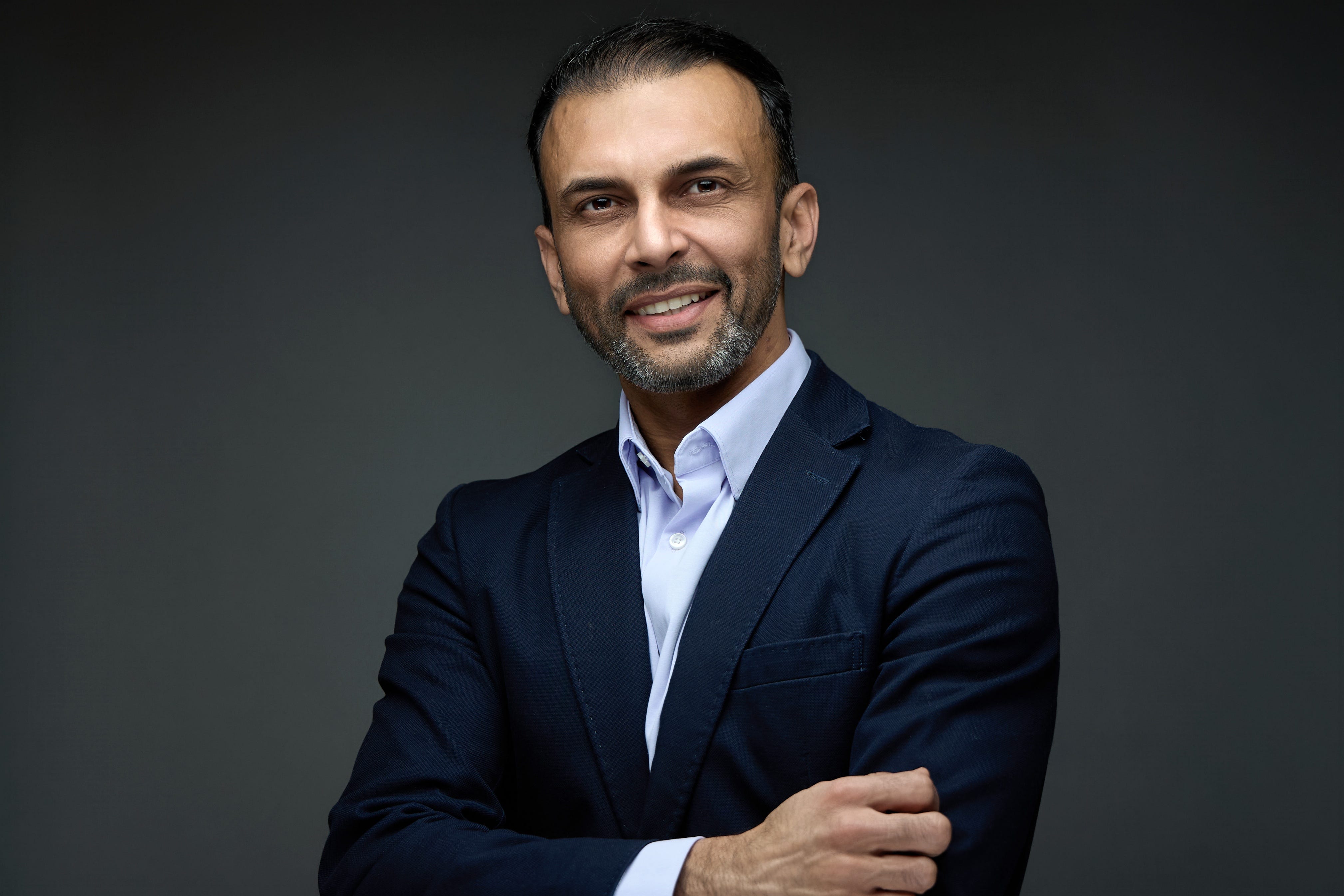
Qasim Rashid is a human rights attorney, author, and host of Let’s Address This—a platform dedicated to human rights, accountability, and the people-powered journalism that corporate media refuses to deliver.
.
People don't trust establishment politicians or establishment media. This is progress.
I think Graham Platner has some skeletons, and many are related to his likely suffering from PTSD related to military service. However, he has a clear vision about what is going on against us, and isn't afraid to face the real problems!