


This is a piece on my city of Chicago, but its a story that is playing out nationwide, with a lesson that is of benefit to everyone who cares about their economic security.
On Chicago politics, new media journalist and activist Tatyana Najee coined a phrase that says it all: “Chicago doesn’t have a mayor problem, it has an alderman problem.” The current budget debacle, which threatens to undermine Chicago’s financial stability, is the perfect example.
Sadly, billionaires and corporate media have clouded the truth. In doing so, they undermine the voices of working people, hiding the actual solution to Chicago’s budget gap, and obscuring a real path forward to long-term success for working families and corporations alike. So I’m bringing the receipts: what is happening, why Mayor Brandon Johnson’s plan is the right plan, and why we cannot get distracted by corporate media and billionaire-funded politicians more obsessed with power than service. Let’s Address This.
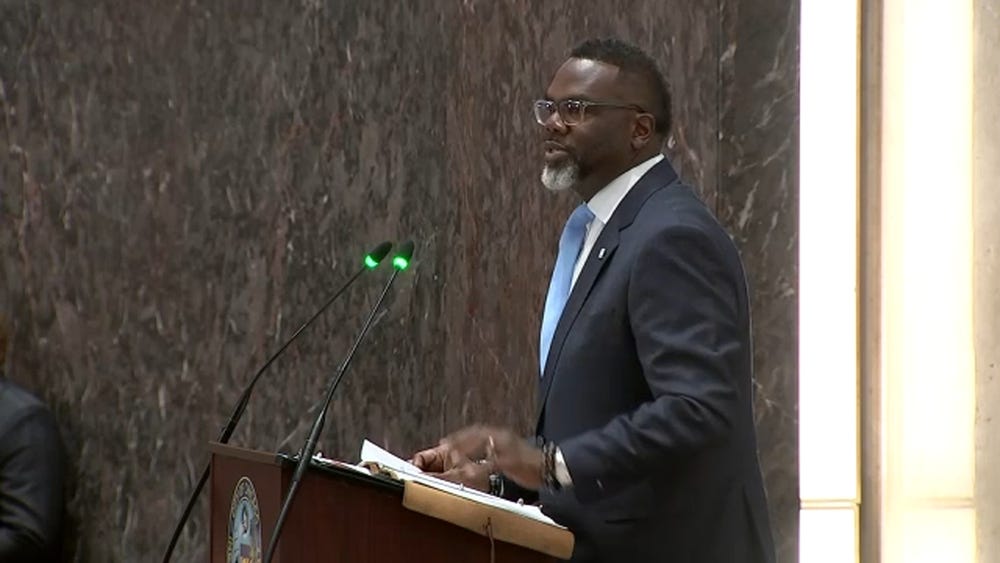
Let’s Start With The Letter
On Tuesday, November 10, members of the “Corporate Caucus” sent a letter to Mayor Johnson telling him they will not support a budget that increases taxes on corporations or authorizes new spending. Twenty-eight of Chicago’s 50 aldermen signed it. Their words: “a tax on jobs, which hinders our city’s ability to grow, would not get our votes.” The mayor needs 26 votes to pass a budget.
This letter is shortsighted, dishonest, and devastates working people. Moreover, it offers no practical solution. It’s an attempt to stop progress and disrupt the entire city so that power remains corrupted in the hands of the wealthy, rather than wielded by the needs of working people.
What Mayor Johnson Is Actually Proposing
In his Fair Share Budget, Mayor Johnson proposes critical investments to meet the needs of everyday Chicagoans:
$7 million in increased funding for Community Violence Intervention (CVI) workers, continuing the work that has reduced Chicago homicides to the lowest level since 1965. This is no small feat and mandates further investment.
$30 million to fully fund our public libraries—because libraries are critical to a functioning society and help decrease hate and violence
$30 million to fund homelessness prevention services, reversing cuts by the Trump administration—again, combatting poverty decreases violence.
An additional City-run mental health clinic, his fourth since taking office. This is a critical resource in a country that doesn’t guarantee healthcare as a human right.
40,000 paid jobs through Chicago Youth Works, putting young people to work across the city—who will be crucial to a city that will need new professionals as Chicago businesses grow.
These are all ambitious goals and also are proven models of success. The question comes down to how we pay for it? Well, the Illinois Constitution limits the City of Chicago in its ability to raise revenue. This means Mayor Johnson has one of three options:
Cut essential services.
Raise property taxes.
Raise taxes on large corporations.
Cutting essential services ensures an increase in poverty and crime. Raising property taxes on working families ensures exacerbating the affordability crisis. Any logical personal can realize that in an economy where corporations are making record profits, a subtle tax increase of those record profits to reinvest in the community generating those profits makes the most sense. Accordingly, Mayor Brandon Johnson has proposed the following:
The Equitable Employer Tax: This is type of tax Chicago used for decades. This is a small fee per employee on businesses with over 125 employees. That’s $25 a month, less than a dollar a day per employee. This tax applies to only 2.8% of registered corporations and raises an astounding $101 million a year.
A higher Personal Property Lease Transaction (PPLT) Tax: The Mayor proposes raising this tax from 15% to 20%. It works by generating revenue from the software and equipment leases used by corporations, and will result in another $234 million in 2027.
And guess what? Voters support this. And they’ve told us they support this. Recently, over 88% of Chicagoans polled expressed support for taxes on corporations to fund social services. Who in their right mind says “tax me more and spare the wealthy corporations” No one! Yet their representatives ignore them in favor of billionaires and the top 1%. This is, in a word, unacceptable. And it gets worse when you realize that those objecting to the Mayor’s plan have literally no plan of their own.
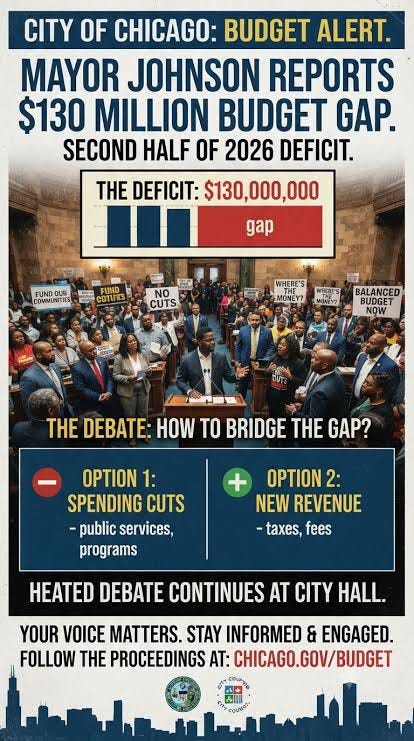
Their “Plan”
The Corporate Caucus has told us repeatedly what they are against. What they refuse to share is what they are for. They refuse to offer any pathway to closing the budget gap other than sending debt collectors after working people, raising property taxes, or cutting essential services.
We’ve seen this approach fail, just last year. In 2025, their alternative budget leaned on selling off debt from unpaid tickets and city services. The Institute for the Public Good warned it carried “an overall increased cost burden on working class Chicagoans.” This July, Mayor Johnson said the city was $130 million short after the revenue the Council backed failed to materialize. Mayor Johnson put it plainly: “No one has come up with a viable solution other than saying what they do not want.”
And while those who oppose the Mayor’s budget offer no viable solution, the Mayor’s results speak for themselves. It is no accident that under Mayor Johnson’s leadership, Chicago has continued to remain the #1 best big city for the 10th year straight and the #1 corporate relocation city for the 13th year straight. Businesses are moving here because it is profitable for them to do so. Rather than taxing working people, the Mayor wants those businesses to reinvest in the city that is helping them become even more profitable. That partnership is how economies thrive. And the Mayor has built a powerful economy that not only attracts growing businesses now, but by investing in young people to gain excellent job experience, he is ensuring those businesses stay in Chicago long term. That is a win-win for working people and for corporations. The only people that lose are billionaires looking for even more power.
What You Can Do
We just saw a national election on November 3, a binding mandate, that rejected the politics of billionaire control, and instead elevated the needs of working people. Indeed, it should outrage everyone in Chicago, and frankly nationwide, that while nearly 9 out of 10 Chicagoans polled want this policy to pass, billionaires are funding Chicago’s aldermen to look the other way.
This is why I keep saying this is not a Republican versus Democrat issue. Most of Chicago politics is Democrats. This is a billionaire versus working class issue. We cannot allow billionaire fueled culture wars and disinformation to decide our politics.
Mayor Johnson’s plan prioritizes working people, balances our budget, and places Chicago on long-term financial security. We have a national talent leading us in Chicago, and we should continue to support him on this budget and in his reelection.
So reject the billionaire culture wars, and stand united with working people in this class war against billionaires. Call your alderperson this week and tell them to support the Fair Share Budget. Click to Find Your Alderperson.
Then share this article with every Chicagoan you know. Chicago’s Alderman problem isn’t one we have to live with, but if we don’t act now, it is one that will hurt us all.
REMINDER: If you’re not a fan of monthly subscriptions, support our human rights platform with a one-time contribution at any amount that fits your budget.
Qasim Rashid is a human rights attorney, author, and host of Let’s Address This—a platform dedicated to human rights, accountability, and the fight against the disinformation and hate that corporate media refuses to name. Subscribe, share, and let’s remain relentless in our mission for a more perfect Union.
YES 100 PERCENT
THANK YOU
You and Christopher Armitage should chat; the city has an additional set of solutions: create new, revenue-generating publicly-owned institutions. Municipal fiber, a public Bank of Chicago, even delivery services which would return profits back to city coffers.