


Peaceful protest is enshrined in the Bill of Rights. Americans have exercised this right throughout our nation’s history to protest government overreach, tyranny, and injustice. Today, that right is once again being tested.
Across the country, working people are mobilizing to protest ICE raids, mass arrests, and the targeting of immigrant, Indigenous, and Black and brown communities. These protests are a direct response to state violence playing out in real time. And the Trump regime has made clear it does not respect the right to peaceful protest, particularly when that protest challenges white supremacy and authoritarian power.
That reality means preparation matters. Whether you are protesting this week, next week, or supporting loved ones who are, the goal is the same: protect yourself, protect each other, and remain rooted in principle. Below are key rules I urge you to read, share, and keep with you as we continue to show up for our communities.
Let’s Address This.
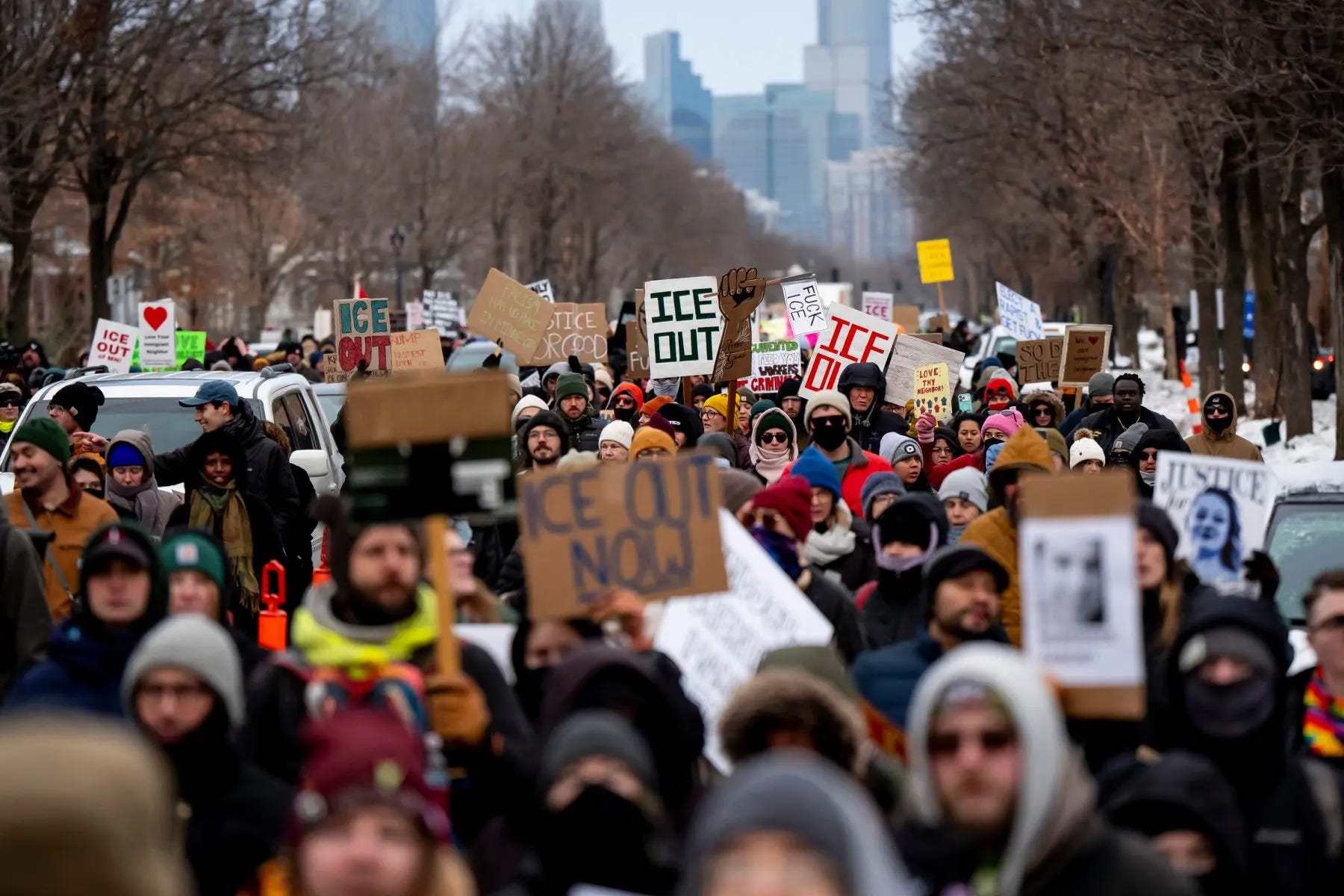
Why We Must Be Ready While Protesting Right Now
Let’s be clear about the gravity of the moment we are in. Last week, ICE murdered Renee Good, a 37 year old mother in Minnesota, for the act of peacefully protesting. That killing did not occur in isolation. It came right after the deadliest year in decades for people killed by ICE or while in ICE custody—a fact confirmed by ICE’s own data and independent reporting. These deaths are not accidents. They are the inevitable result of an agency that operates with impunity, secrecy, and contempt for due process.
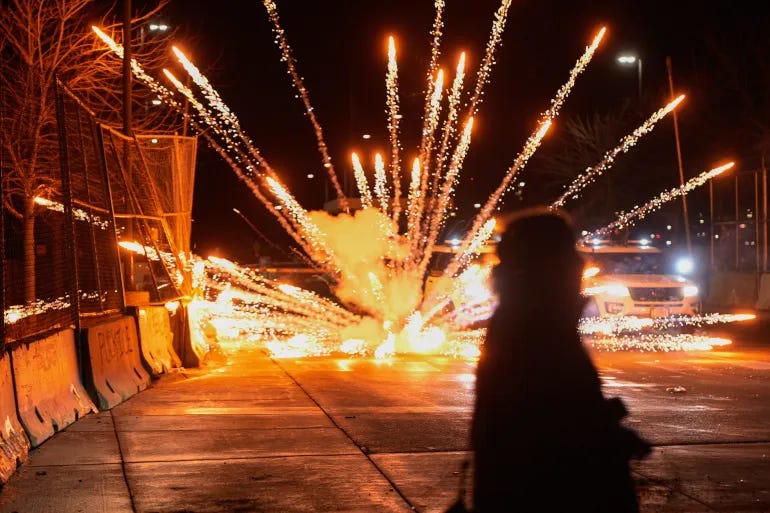
Since killing Renee Good, ICE in Minnesota has gone on to arrest members of the Oglala Sioux Tribe, underscoring what many have warned for years: ICE’s reach is expanding beyond immigration enforcement into outright state violence against Indigenous communities and U.S. citizens. Simultaneously, ICE data shows that in cities like Chicago, 97 percent of people detained have no criminal record whatsoever.
This was never about immigration. It was never about public safety or the rule of law. It has always been about power, control, and the advancement of white supremacy through fear. Therefore, as you loudly and proudly protest this week, or any week, keep the following rules in mind to stay safe, grounded, and protected—especially if things escalate.
13 Rules to Protect Yourself While Protesting
If you are undocumented or your immigration status is in processing, it is highly advisable you avoid these protests altogether.
This is not a judgment on courage or commitment. It is a safety assessment in a moment of heightened enforcement.
If you still insist on protesting, follow the below rules and additionally have your A number memorized.
Ensure your loved ones know where you are and what time you will meet them at a pre-determined location. Do not leave your location to chance—ensure your loved ones are in the know.
Have the phone numbers of your lawyer and loved ones memorized in case you need to call them from memory.
If stopped by law enforcement for any reason, ask simply if you are free to go. If they answer yes, then walk away and do not double back.
If the answer is no, do not voluntarily talk to police, the National Guard, ICE, or any member of law enforcement. Do not volunteer any information about yourself. Do not initiate conversation. You always have the right to remain silent.
Do not lie to law enforcement. Law enforcement can lie to you to get what they want. You cannot lie to law enforcement. Under no circumstance should you lie to law enforcement. The best way to not lie, is to not speak. Simply remain silent.
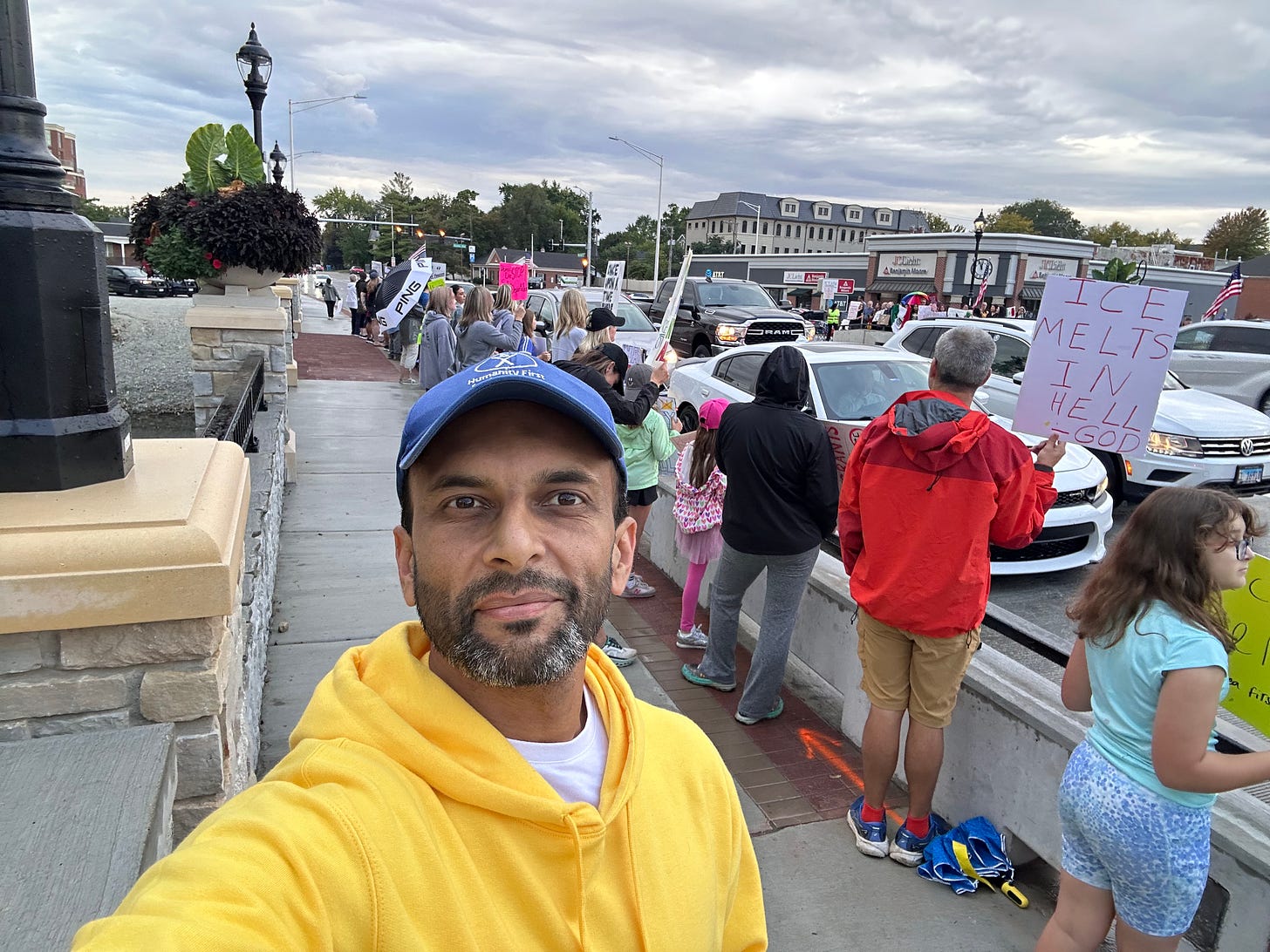
Protesting ICE fascists in Illinois Ask for a lawyer immediately if you are in fact detained or arrested. Do not sign anything, do not admit to anything, and do not confess anything. Simply ask to speak to your lawyer. Repeatedly ask in the clearest terms possible that you would like to speak with your lawyer. Period.
You can lawfully ask any law enforcement officer or military person to share their name and badge number with you, and what department they represent. You should do this if your rights are violated. But do not volunteer any information about yourself. Some states require you to disclose your name. Here is a helpful resource to determine if your state is one such state.
You can lawfully record in any public space, anything that is in plain view. ICE fascists might threaten to arrest you for recording. These are threats, and may be real threats because ICE does not follow the law, but they are not legal threats.
You can march in the streets or on any public space and the police cannot arrest or detain you. However, if you are deliberately obstructing public throughways, you can be detained.
Be especially cautious in states where MAGA-controlled governments have expanded legal protections for drivers who harm protesters or openly encourage violent responses to demonstrations. Several states use vague standards such as a driver “feeling threatened” to justify driving into crowds—language that is deliberately ambiguous and dangerous. Know your state’s laws, stay situationally aware, and prioritize your safety, especially where officials have signaled hostility toward protestors.
Generally speaking, law enforcement can ask you to unlock your phone by Face ID or finger print, but not by entering your passcode. Set your phone security to require your passcode to unlock it. Do Not Voluntarily Unlock Your Phone For Law Enforcement For Any Reason.
Be fearless and speak truth even if your voice shakes. Know that you are standing on the right side of history, of protecting our Republic from fascists. Godspeed my friends.
Conclusion
The stakes have never been higher, and silence has never been more dangerous. And that’s exactly why I have the deepest gratitude to the millions of you who are or will be proudly and loudly protesting for justice and human rights. As a human rights lawyer, nothing makes me more proud than seeing my fellow countrymen and women rise up in unison against oppression. Finally, if you believe in truth, justice, and protecting the vulnerable—then I hope to earn your trust and support as well. Support my human rights advocacy by becoming a subscriber, sharing this advocacy widely, and helping us stay loud, relentless, and rooted in principle.
Because the fight for our rights demands all of us—now more than ever.
Let’s get to work.

I was once telling a public defender friend about a conversation I started with a police officer at a demonstration. My friend told me never to speak to law enforcement at a demonstration unless I needed medical attention. She said that you never know what might be interpreted as provocation and might cause a violent reaction. I didn't take her seriously. Now I do.
Qasim, Great list. Another list suggests that you write your name and contact information, such as your lawyer's phone number, on your arm with a permanent marker. The reason for including your own name is in case you are knocked out.